
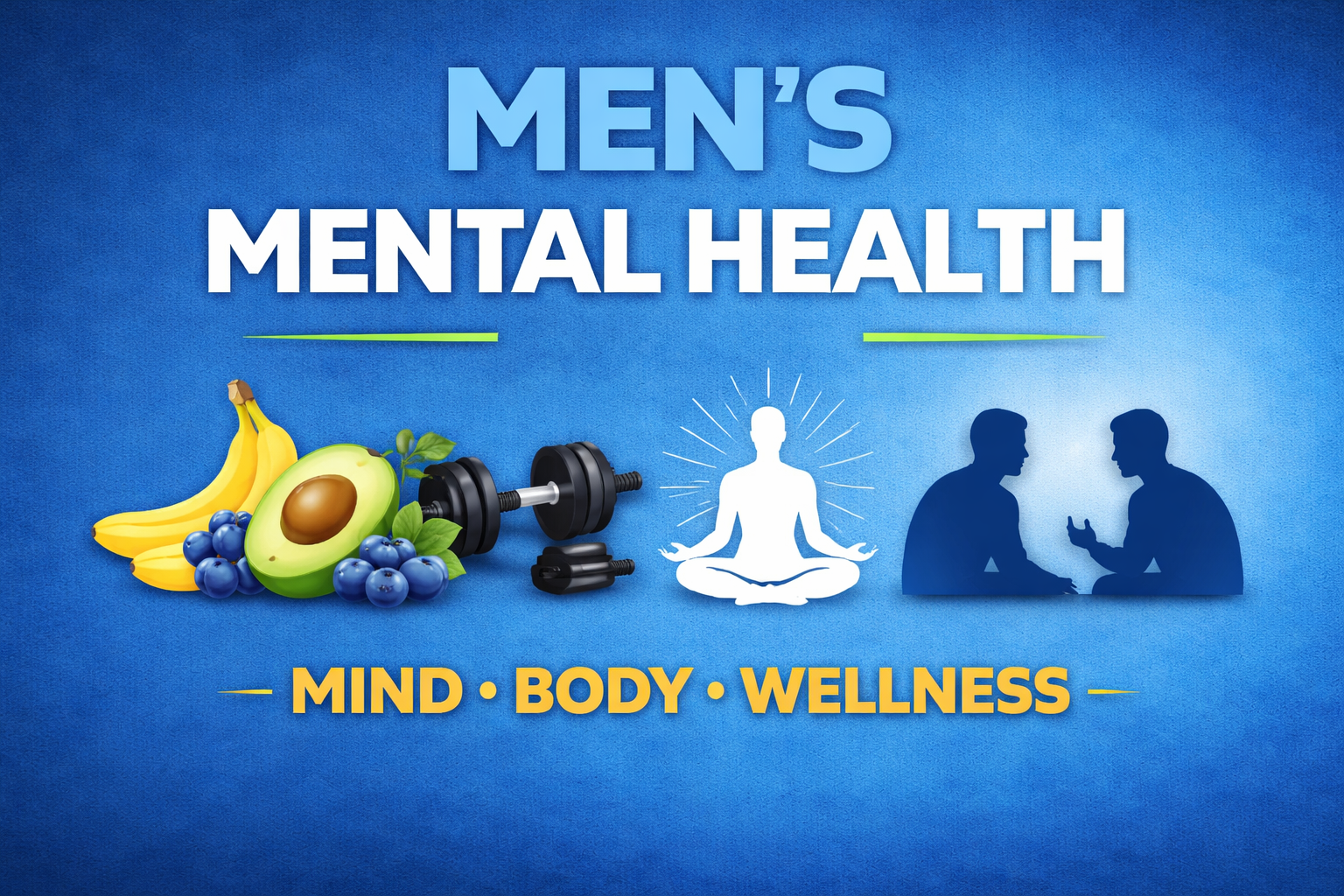
Mental health is an essential component of the general well-being. In the case of men, the society and associated stigmas tend to make it difficult to talk about mental health problems. Men mental health month is celebrated around the world every June in order to create awareness, enlighten men on emotional health and offer them means of achieving a better mental health. This blog is the best place to know all about mental health, stress management, lifestyle improvement, and the integration of healthy foods, fruits, and habits in everyday life.
Your Attractive Heading
Mental health refers to emotional, psychological, and social well-being. It affects how men think, feel, and act in their daily lives. Key aspects include:
- Emotional well-being: Ability to manage emotions such as anger, sadness, or stress.
- Psychological health: Cognitive functions like focus, problem-solving, and decision-making.
- Social well-being: Healthy relationships with family, friends, and colleagues.
Why Men Often Struggle with Mental Health
Men often face unique challenges:
- Social Pressure: Expectations to be “strong” and suppress emotions.
- Work Stress: Balancing career, finances, and personal life.
- Stigma: Fear of being judged for seeking help.
- Lifestyle Factors: Poor diet, lack of exercise, and sleep deprivation can worsen mental health.
Common Mental Health Issues in Men
Some prevalent mental health concerns among men include:
- Depression: Persistent sadness, loss of interest, and fatigue.
- Anxiety Disorders: Excessive worry, restlessness, and tension.
- Stress-related Disorders: High blood pressure, insomnia, irritability.
- Substance Abuse: Alcohol or drug use as coping mechanisms.
- Anger Management Issues: Difficulty controlling anger or frustration.
Lifestyle Changes for Better Mental Health
Small daily changes can significantly impact men’s mental health. These include:
1. Daily Exercise
- Aerobic Exercises: Jogging, swimming, cycling to release endorphins.
- Strength Training: Lifting weights reduces stress and boosts self-esteem.
- Yoga and Meditation: Improves emotional regulation and relaxation.
2. Sleep Routine
- Aim for 7–9 hours of quality sleep per night.
- Avoid screens before bed and practice a calm bedtime ritual.
3. Stress Management
- Practice mindfulness or deep breathing exercises.
- Journaling can help process emotions and reduce anxiety.
Diet and Nutrition for Mental Health
Nutrition plays a vital role in brain function and mood regulation. Here’s a guide to men’s mental health-friendly foods:
Essential Nutrients
- Omega-3 Fatty Acids: are present in fish, flax seed, and walnuts; they also boost the mood.
- Vitamin D: exposure to the sun, fortified milk, and eggs; fighting depression.
- Magnesium: Green vegetables, nuts, seeds; relaxes muscles and nerves.
- Zinc: Meat, legumes, seeds; supports brain function.
- B Vitamins: Whole grains, eggs, dairy; essential for energy and mood.
Fruits for Mental Health
- Bananas: Rich in vitamin B6 for serotonin production.
- Blueberries: Antioxidants combat oxidative stress.
- Oranges: Vitamin C reduces stress hormones.
- Avocados: Healthy fats improve brain function.
- Strawberries: Vitamin C and antioxidants for mood stabilization.
- Watermelon: Hydration and nutrient-rich for cognitive support.
Healthy Snacks
- Nuts and seeds (almonds, walnuts, pumpkin seeds)
- Greek yogurt with honey and berries
- Dark chocolate (in moderation)
Home-Based Practices to Boost Mental Health
You don’t always need a gym or expensive supplements. Simple home routines can make a difference:
- Morning Sunlight Exposure: Boosts vitamin D and serotonin.
- Gardening or Indoor Plants: Reduces stress and improves mood.
- Cooking Your Meals: Engaging in meal prep encourages mindfulness.
- Reading and Hobbies: Stimulates cognitive function and relaxation.
- Digital Detox: Limit social media and screen time to reduce anxiety.
Social and Emotional Support
Strong relationships improve mental resilience:
- Good relationships enhance psychological fortitude:
- Join support groups or online communities.
- Seek professional counseling if needed—therapy is normal and effective.
- Keep in touch with their friends and family members.
Myths About Men’s Mental Health
Men should be strong and not show emotions.
Truth: Expressing emotions is healthy and necessary.
Mental health issues are rare in men.
Truth: About 1 in 4 men experiences mental health issues in their lifetime.
Seeking therapy is a sign of weakness.
Truth: Therapy is a proactive step toward wellness, not weakness.
Activities for Mental Wellness
- Physical Activities: Walking, swimming, cycling.
- Mindful Practices: Meditation, deep breathing, yoga.
- Creative Outlets: Music, painting, writing.
- Volunteer Work: Helping others improves self-worth and reduces stress.
The Role of Fruits and Diet in Mental Clarity
A consistent intake of mental health-boosting foods enhances cognitive function:
- Breakfast Ideas: Oatmeal with berries and nuts.
- Lunch Options: Grilled fish with leafy greens and avocado.
- Snack Options: Banana or mixed nuts.
- Dinner Choices: Lentil soup with vegetables and a side of fruit.
Hydration is also crucial—aim for 2–3 liters of water daily.
Integrating Mental Health Into Daily Routine
- Morning: Stretching, meditation, fruit-rich breakfast.
- Afternoon: Balanced lunch, short walk, mindfulness break.
- Evening: Exercise, cooking healthy dinner, connect with loved ones.
- Night: Journaling, reading, and winding down for sleep.
Conclusion
Mental Health Month of the men reminds us that mental health is a thing that is as important as physical fitness. Men can be able to be healthier mentally and emotionally by adopting healthy habits, eating a brain-boosting diet, exercising, and most importantly seeking support when it is necessary. Such simple measures as including fruits in your diet, mindfulness, and networking can do a lot of good. Mental health is not a weakness- it is a priority.

 English