
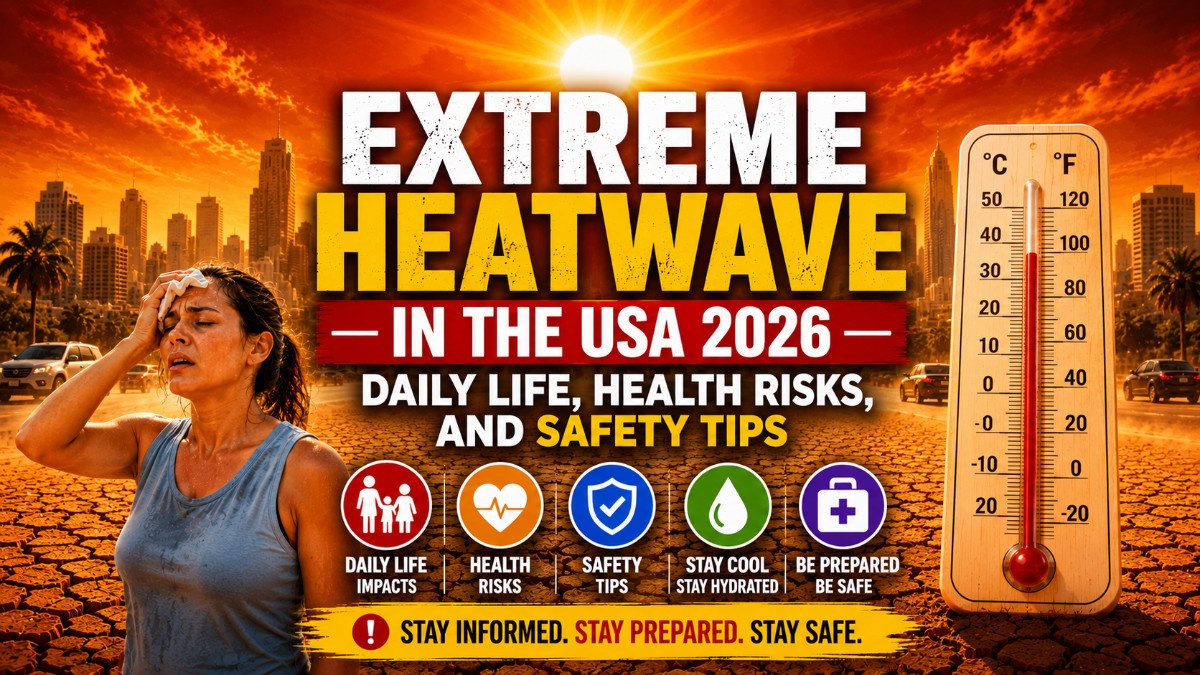
The United States is no stranger to brutal summers — but 2026 changed the rules entirely.
In March 2026, a historic heatwave gripped the southwestern United States with temperatures running 20–30°F above seasonal averages across California, Nevada, and Arizona. Phoenix recorded multiple consecutive days near 106°F — smashing every previous March temperature record. Scientists at Berkeley Earth confirmed it as the largest temperature anomaly recorded in the western U.S. in 170 years of instrumental observations.
That was just March. As summer approaches, forecasters warn that the worst may still be coming.
This is not a seasonal inconvenience. This is a public health emergency — and knowing how to protect yourself and your family could save lives.
Why Extreme Heat Is Becoming More Dangerous
Extreme heat is now the leading cause of weather-related deaths in the United States. Unlike hurricanes or tornadoes, heat kills silently. It overwhelms the body before most people even realize the danger.
Climate scientists agree: human-caused global warming is making these events more frequent, more intense, and harder to predict. The 2026 heatwave was described by experts as “virtually impossible without climate change.” If this is the new normal, preparation is no longer optional.
What Is a Heat Wave?
Definition of a Heat Wave
A heat wave is a prolonged period of excessively hot weather, often accompanied by high humidity, that exceeds the historical averages for a region. The U.S. National Weather Service typically defines a heat wave as two or more consecutive days with temperatures at or above 90°F (32°C).
Difference Between Normal Summer Heat and Extreme Heat
Normal summer heat is uncomfortable. Extreme heat is life-threatening.
The key differences include:
- Duration — Extreme heat lasts days or weeks without overnight cooling relief.
- Intensity — Temperatures spike 15–30°F above normal seasonal levels.
- Humidity — High humidity raises the “feels like” temperature dramatically.
- Nighttime temperatures — Dangerous heat waves offer no overnight escape.
When the body cannot cool itself, even healthy people face serious health risks.
What Causes a Heat Wave?
High-Pressure Systems
Most heat waves form when a high-pressure system — called a heat dome — stalls over a region. This dome traps hot air close to the surface, blocks cloud formation, and prevents cooling rain. The 2026 Southwest event was driven by exactly this type of slow-moving, persistent high-pressure system.
Climate Change and Global Warming
Climate change amplifies every heat wave. Rising greenhouse gas emissions trap more heat in the atmosphere, pushing baseline temperatures higher. Scientists note that events like the 2026 heatwave — once considered once-in-a-century anomalies — are now occurring with alarming regularity due to increasing temperature variance in the climate system.
Urban Heat Island Effect
Cities absorb and retain heat far more than rural areas. Asphalt, concrete, and buildings store daytime heat and release it at night, keeping urban residents exposed 24 hours a day. This urban heat island effect means city dwellers face significantly higher heat stress than surrounding areas.
Health Impacts of Heat Waves
Heat is not just uncomfortable — it is medically dangerous. Here is what it does to the human body.
Dehydration
The body sweats to cool itself. During extreme heat, you lose fluids and electrolytes faster than you realize. Dehydration impairs organ function, causes dizziness, and — if severe — leads to organ failure.
Heat Exhaustion
Heat exhaustion occurs when the body overheats but has not yet reached a critical state. It is serious, but treatable with prompt action. Symptoms include heavy sweating, nausea, weakness, and a rapid pulse.
Heat Stroke
Heat stroke is a medical emergency. The body’s temperature regulation system fails, and core temperature rises above 104°F (40°C). Without immediate treatment, heat stroke causes brain damage, organ failure, and death.
Breathing Problems and Heart Risks
Extreme heat thickens the air with pollutants and ground-level ozone. People with asthma, COPD, or heart disease face dramatically elevated risks. Heat forces the heart to work harder to pump blood to the skin for cooling — placing enormous stress on the cardiovascular system.
Who’s Most at Risk From Heat Waves?
Not everyone faces the same level of danger. These groups need extra attention.
Older Adults
The body’s ability to regulate temperature declines with age. Older adults often do not feel thirsty even when dehydrated, and many take medications that impair heat tolerance.
Infants and Young Children
Children’s bodies heat up three to five times faster than adults. They cannot communicate distress effectively, making close monitoring essential during hot weather.
Pregnant Women
Heat stress during pregnancy raises the risk of premature labor, dehydration, and complications for both mother and baby. Pregnant women must be especially cautious about overheating.
Outdoor Workers
Construction workers, farmers, delivery drivers, and others working outdoors during peak heat hours face dangerous cumulative heat exposure throughout the day.
People With Medical Conditions
Individuals with heart disease, diabetes, kidney problems, or mental health conditions — as well as those taking certain medications — are at significantly higher risk of heat-related illness.
Tips for Infants, Children, and Pregnant Women
Staying Hydrated
- Offer water or breast milk to infants frequently — every 15–20 minutes during hot weather.
- Pregnant women should drink at least 10–12 glasses of water daily, more if outdoors.
- Avoid sugary drinks and caffeine, which accelerate dehydration.
Keeping Indoor Spaces Cool
- Use air conditioning whenever possible. If you don’t have AC, visit public cooling centers, libraries, or shopping malls.
- Close curtains and blinds during peak sun hours (10 AM – 4 PM).
- Use fans strategically — they help move air but don’t cool a room above 95°F (35°C).
Avoiding Peak Heat Hours
Stay indoors between 10 AM and 4 PM, when the sun’s intensity peaks. Schedule outdoor activities for early morning or after sunset.
Safe Clothing and Nutrition Tips
- Dress infants and children in lightweight, loose, light-colored clothing.
- Feed children and pregnant women water-rich foods such as watermelon, cucumbers, oranges, and yogurt.
- Avoid heavy, hot meals that raise the body’s internal temperature.
Signs and Symptoms of Heat-Related Illness
Early Warning Signs
- Excessive sweating
- Skin that feels hot to the touch
- Fatigue or unusual tiredness
- Mild headache
- Increased thirst
Symptoms of Heat Exhaustion
- Heavy sweating
- Cool, pale, and clammy skin
- Fast, weak pulse
- Nausea or vomiting
- Muscle cramps
- Dizziness and fainting
Symptoms of Heat Stroke
- Body temperature above 104°F (40°C)
- Hot, red, dry, or damp skin
- Rapid, strong pulse
- Confusion, slurred speech, or loss of consciousness
- No sweating despite extreme heat
If You Think Someone Is Suffering From the Heat
First Aid Steps
- Move the person to a cool, shaded, or air-conditioned area immediately.
- Have them lie down with feet slightly elevated.
- Remove excess clothing.
- Give cool (not ice-cold) water to drink if they are conscious and alert.
Cooling Techniques
- Apply cold, wet cloths to the neck, armpits, and groin — areas where blood vessels are close to the skin.
- Use a cool mist spray or damp towel on exposed skin.
- Place ice packs wrapped in cloth on pulse points.
- Fan the person while misting with water to speed cooling.
Emergency Kit for Heat Waves
Prepare your heat emergency kit before a heatwave arrives. Once temperatures peak, stores run out of supplies fast.
Water Supply
Store one gallon of water per person per day for at least three days. Keep additional supplies for pets.
Electrolytes and Snacks
- Oral rehydration salts (ORS) or electrolyte packets
- Sports drinks (low sugar)
- Non-perishable water-rich snacks: dried fruit, crackers, nuts
First Aid Items
- Thermometer (to check body temperature)
- Basic first aid kit
- Any prescription medications with extra supply
Cooling Towels and Portable Fans
- Reusable cooling towels
- Battery-powered or hand-held fans
- Spray bottles for misting
Emergency Contacts and Power Backup
- List of local emergency contacts and cooling centers
- Portable phone charger or power bank
- Battery-powered radio for weather alerts
Heatwave Safety Tips
Stay Hydrated
Drink 8–10 glasses of water daily minimum during a heatwave — even if you don’t feel thirsty. Thirst is a late sign of dehydration. Avoid alcohol and excessive caffeine.
Avoid Direct Sunlight
Wear wide-brimmed hats, UV-protective sunglasses, and sunscreen (SPF 30 or higher) if you must go outside. Take shade breaks every 20–30 minutes.
Wear Lightweight Clothing
Choose loose-fitting, light-colored, breathable fabrics like cotton or linen. Avoid dark colors that absorb heat.
Check Weather Alerts
Download the NOAA Weather App or enable emergency alerts on your smartphone. Stay informed about heat advisories, heat warnings, and excessive heat watches in your area.
Protect Pets and Elderly Family Members
- Never leave pets or children in parked cars — temperatures inside a car can reach 160°F within minutes.
- Check on elderly neighbors and family members at least twice daily.
- Make sure pets have fresh water and shade at all times.
Conclusion
Staying Safe During Extreme Heat
The 2026 heatwave is a powerful reminder that extreme heat is the most underestimated natural disaster in America. It does not make headlines the way hurricanes do — but it kills more people every year.
The good news is that heat-related illness is almost entirely preventable. Stay hydrated. Stay cool. Know the warning signs. Act fast when someone needs help.
Your safety — and the safety of those around you — depends on preparation, awareness, and community action.
Importance of Community Awareness and Preparation
Heat does not affect everyone equally. The elderly, infants, outdoor workers, and low-income households without air conditioning bear the greatest burden. Communities that check in on vulnerable neighbors, share resources, and open cooling centers save lives.
Take the heat seriously. Prepare now. Act together.

 English