
A new Ebola outbreak is making global headlines right now — and for very good reason. As of May 16, 2026, the World Health Organization (WHO) has declared the Ebola disease caused by the Bundibugyo virus in the Democratic Republic of the Congo (DRC) and Uganda a Public Health Emergency of International Concern (PHEIC). (WHO)
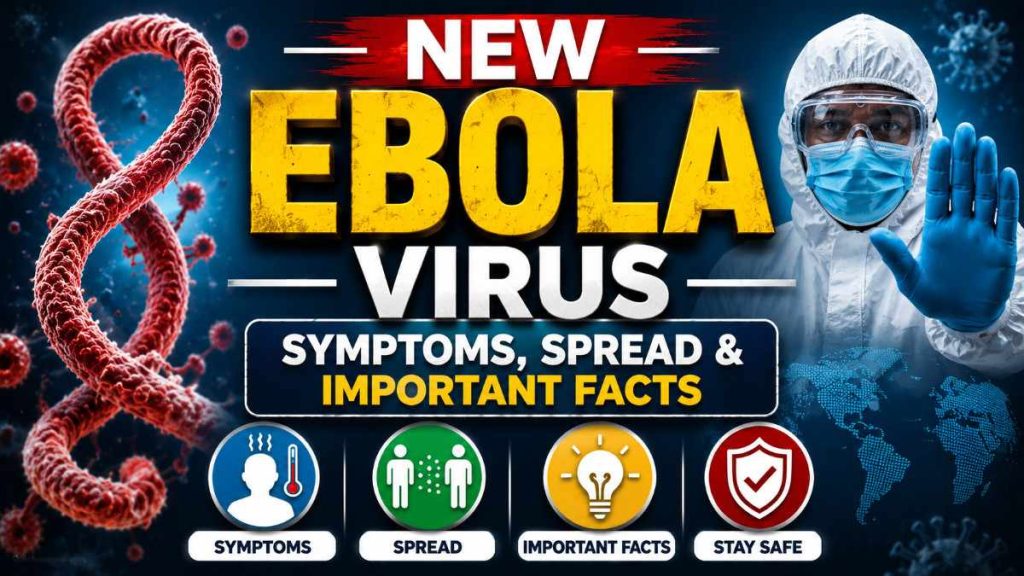
This is not the familiar Zaire strain most people associate with Ebola. The current outbreak involves the Bundibugyo species, which has only caused two previous outbreaks — in 2007 and 2012 — making its epidemiology far less understood than other strains.
Why Are People Searching About Ebola Again?
The answer is simple: the virus is active, spreading, and affecting real communities right now. This marks the DRC’s 18th Ebola virus outbreak since 1976, and its second outbreak of the Bundibugyo virus. With cases now confirmed beyond DRC borders, the global health community is on high alert.
Basic Overview of the Virus
Ebola virus disease (EVD) is a severe, often fatal illness in humans. It belongs to a family of viruses called orthoebolaviruses and causes what is known as viral hemorrhagic fever. There are four distinct species known to affect humans: Zaire, Sudan, Bundibugyo, and Tai Forest. The current 2026 outbreak is caused by the Bundibugyo strain — a critical distinction because it changes how the disease is diagnosed and treated. (Imperial College London)
2. History of Ebola Virus
First Ebola Outbreak
Ebola was first identified in 1976 — simultaneously in two locations: near the Ebola River in what is now the DRC, and in Sudan. Both outbreaks were caused by different species of the virus, which gave scientists early clues about how diverse this pathogen truly is.
Origin of the Name “Ebola”
The virus takes its name from the Ebola River in the DRC, near where the first known outbreak occurred. Scientists named it after the closest geographic landmark at the time.
Important Outbreaks in History
- 1976 — First confirmed outbreaks in DRC and Sudan
- 2007 — First-ever Bundibugyo strain outbreak in Uganda
- 2014–2016 — The largest Ebola epidemic in history, devastating West Africa
- 2018–2019 — A major outbreak in North Kivu and Ituri provinces, DRC
- 2025 — A Sudan strain outbreak, declared over in January 2025
- 2026 — The current Bundibugyo outbreak in DRC and Uganda
3. Where Ebola Virus Is Found
African Countries Affected
Ebola primarily affects sub-Saharan Africa. The current 2026 outbreak is concentrated in Ituri Province of the DRC, across at least three health zones — Bunia, Rwampara, and Mongbwalu. (WHO)
Additionally, two laboratory-confirmed cases (including one death) with no apparent link to each other have been reported in Kampala, Uganda, in individuals who traveled from DRC. (WHO)
The DRC is the most affected country historically, having experienced 18 outbreaks since 1976.
Ebola Cases in the USA
To date, no cases of Ebola disease have been confirmed in the United States because of this outbreak. The overall risk to the American public and travelers remains low.( CDC)
However, the CDC is actively monitoring the situation. The CDC is “urgently coordinating with interagency partners to ensure the outbreak is managed and prevent further spread,” with over 30 CDC staff members deployed in the DRC country office, and more workers set to arrive in coming days.( NPR)
Global Monitoring and Alerts
Africa’s top public health agency convened an urgent meeting with Congo, Uganda, South Sudan, and global partners to reinforce cross-border surveillance, preparedness, and response efforts. WHO has also advised countries not to close their borders, stressing coordinated response over panic. (CNN)
4. How Ebola Virus Spreads
Understanding how Ebola spreads is the most powerful tool for prevention. Here’s what you need to know:
Human-to-Human Transmission
Ebola virus spreads through direct contact with the bodily fluids of an infected person and does not spread through casual contact or air. This means simply being near someone does not put you at risk.( CDC )
Contact With Infected Body Fluids
The virus travels through blood, vomit, saliva, urine, feces, sweat, breast milk, and semen. Any direct contact with these fluids — especially through broken skin or mucous membranes — can transmit the infection.
Animal-to-Human Spread
Outbreaks are typically linked to zoonotic spillover (animal-to-human transmission), followed by human-to-human transmission via close contact with an infected individual’s bodily fluids. Bats are considered a likely natural reservoir of the virus.( Imperial College London )
Contaminated Surfaces and Objects
Transmission can also occur through contaminated surfaces such as shared bedding. In resource-limited settings, this is a significant concern, especially in informal healthcare facilities.( Imperial College London )
Early Symptoms of Ebola
Ebola symptoms typically appear between 2 and 21 days after exposure. Early signs are easy to confuse with other illnesses, which is what makes it so dangerous.
The symptoms of Ebola infection can be sudden and include fever, fatigue, muscle pain, headache, and sore throat — very similar to flu or malaria at first glance.( Imperial College London )
Early warning signs include:
- Sudden high fever — often the very first sign
- Severe headache — intense and persistent
- Extreme weakness and fatigue — the body begins to shut down
- Muscle and joint pain — widespread body aches
- Sore throat — often mistaken for a common cold
Important: If you have recently traveled to an affected region and experience these symptoms, seek medical attention immediately and inform healthcare providers of your travel history.
Serious Symptoms of Ebola
As the disease progresses — usually within days — far more dangerous symptoms emerge.
Severe symptoms include vomiting, diarrhea, rash, and internal and external bleeding. ( Imperial College London )
Advanced-stage symptoms include:
- Uncontrollable vomiting — sometimes with blood
- Severe diarrhea — leading to rapid dehydration
- Abdominal pain — cramping and internal distress
- Bleeding symptoms — from the gums, nose, or in urine and stool
- Severe dehydration — a life-threatening complication if untreated
The suspected index case of the current outbreak was a nurse who died at the Evangelical Medical Centre in Bunia after showing symptoms that included fever, bleeding, vomiting, and severe weakness.( CNN )
Why Ebola Is Dangerous
High Fatality Rate
Ebola has caused over 40 documented confirmed outbreaks since 1976, with an average case fatality ratio over 50%. The current Bundibugyo strain carries a case fatality rate estimated at 30–40%, still alarmingly high by any global health standard.( Imperial College London )
Rapid Outbreak Spread
Infectious disease experts noted that community spread of the virus was probably happening for weeks before this outbreak was even officially recognized — meaning the true scale is often larger than initial reports suggest.( NPR )
Effect on Communities and Healthcare Systems
A deepening security crisis in Ituri, where clashes between rival militia groups have killed scores of civilians in recent weeks, has worsened an already dire humanitarian situation, leaving health facilities overwhelmed or non-functional in parts of the province.( CNN )
Major Ebola Outbreaks
2014–2016 Ebola Outbreak
This remains the largest Ebola epidemic in recorded history, primarily affecting Guinea, Sierra Leone, and Liberia. It resulted in over 11,000 deaths and reshaped the world’s understanding of global health preparedness.
Recent Ebola Cases (2026)
As of the latest CDC update, there are 10 confirmed cases and 336 suspected cases including 88 deaths in DRC, and 2 confirmed cases including 1 death in Uganda. These numbers continue to evolve as surveillance expands.( CDC )
International Emergency Response
WHO Director-General Tedros Adhanom Ghebreyesus declared this a public health emergency of international concern but stressed it does not meet the criteria of a pandemic emergency, and advised countries against closing their borders.( NPR )
Ebola Virus and Travel Safety
Airport Screening
Public health authorities are stepping up screening at major international airports, particularly for travelers arriving from DRC and Uganda. Thermal scanners and health questionnaires form the first line of defense.
Travel Precautions
The CDC has travel health notices in place for DRC and Uganda to help Americans planning travel to either country learn how to keep themselves safe from Ebola.( CDC )
If you are traveling to or from affected regions:
- Register with your country’s embassy
- Monitor WHO and CDC travel advisories daily
- Avoid contact with sick individuals or animal carcasses
- Carry hand sanitizer and wear protective gear if working in healthcare
Awareness During Outbreaks
Avoid non-essential travel to active outbreak zones. Travelers who develop fever or other symptoms within 21 days of returning from affected areas should immediately seek medical care and disclose their travel history.
Home Care and Awareness Tips
While Ebola requires professional medical treatment, these home-level awareness practices matter for community safety:
- Practice strict hygiene — wash hands frequently with soap and water for at least 20 seconds
- Stay hydrated — oral rehydration is critical if fever sets in
- Avoid close contact with anyone showing Ebola-like symptoms
- Understand isolation — suspected cases must be isolated immediately to prevent spread
- Follow official guidance — rely on WHO, CDC, and your national health authority for accurate information, not social media rumours
Prevention Tips
There is no approved vaccine or specific treatment for the current Bundibugyo strain of Ebola. Researchers say there is now an experimental vaccine candidate that has shown around 50% efficacy in animal studies, but its potential in human patients has not yet been assessed.( NPR )
Until a vaccine is available, prevention depends entirely on behavior:
- Wash your hands regularly, especially after contact with anyone who is sick
- Avoid direct contact with blood or bodily fluids of infected people
- Do not handle the bodies of people who have died from suspected Ebola
- Use protective equipment (gloves, masks, gowns) in healthcare settings
- Disinfect surfaces that may have been contaminated
- Seek medical attention early if symptoms develop after potential exposure
Healthcare workers face the greatest risk. Infectious disease experts recommend that healthcare workers dealing with Ebola patients wear head coverings, goggles, masks or face shields, gloves, gowns, and rubber boots.( NPR )
Ebola vs. Other Viruses
Ebola vs. COVID-19
| Feature | Ebola | COVID-19 |
|---|---|---|
| Transmission | Direct contact with body fluids | Airborne / respiratory droplets |
| Fatality Rate | 30–90% (varies by strain) | Under 2% (general population) |
| Vaccine Available | Yes (for Zaire strain only) | Yes (multiple) |
| Current Threat | Active outbreak (DRC/Uganda 2026) | Seasonal/endemic globally |
Ebola vs. Marburg Virus
Both Ebola and Marburg are viral hemorrhagic fevers with similar symptoms and transmission routes. Marburg is caused by a different virus (Marburg virus) but shares the same family (Filoviridae). Marburg tends to have an even higher fatality rate in some outbreaks.
Differences in Symptoms and Spread
COVID-19 spreads easily through the air. Ebola does not. This key difference means Ebola, while far more deadly per infection, is generally harder to catch — but catastrophic when healthcare systems are weak.
Myths and Facts About Ebola
Myth: Ebola Spreads Through the Air
Fact: This is completely false. Ebola virus does not spread through casual contact or air. You cannot catch it by breathing the same air as an infected person. CDC
Common Myths People Believe
| Myth | Fact |
|---|---|
| Ebola spreads like the flu | No — it requires direct fluid contact |
| You can get Ebola from mosquitoes | No — mosquitoes do not transmit Ebola |
| Ebola is always fatal | No — survival is possible with early supportive care |
| Ebola is only in remote jungle villages | No — outbreaks can also affect urban areas like Bunia |
Important Facts Everyone Should Know
- Early detection dramatically improves survival
- Healthcare workers are at highest risk
- The current strain (Bundibugyo) has no approved vaccine or treatment
- Community cooperation is essential for containment
Impact of Ebola on Society
Public Fear and Panic
Ebola generates enormous fear — often disproportionate to actual transmission risk for the average person outside affected areas. This fear, however, can be as damaging as the disease itself, causing people to avoid hospitals, delay treatment, and spread misinformation.
Travel Restrictions
Although WHO has advised against border closures, several airlines and governments have issued enhanced screening protocols for travelers from DRC and Uganda. Africa CDC expressed concern about the risk of further spread due to the urban context of Bunia and intense population movement and mobility related to mining in the affected areas, which are close to Uganda and South Sudan. CNN
Economic and Healthcare Impact
Ebola devastates local economies. Healthcare workers become infected, clinics shut down, trade stops, and fear empties markets. The 2014–2016 outbreak cost West African nations billions of dollars in lost economic output. The current outbreak unfolds in a region already facing conflict, displaced populations, and strained medical infrastructure.
Conclusion
Importance of Awareness
The 2026 Ebola outbreak is a stark reminder that infectious disease threats are never truly gone. This is already the largest documented Bundibugyo outbreak ever recorded, surpassing previous outbreaks of 131 and 38 cases respectively. Awareness saves lives. Imperial College London
Global Health Preparedness
The WHO declaration of a public health emergency of international concern signals that the global community must act in a coordinated way to contain the outbreak. No single country can fight Ebola alone — it demands shared resources, shared expertise, and shared urgency. NPR
Final Thoughts on Ebola Safety
If you are not in an affected region, your immediate risk is very low. Stay informed through trusted sources like WHO and CDC. If you are traveling to affected areas or work in healthcare, take every precaution seriously. Knowledge is your best defense.

 English