
Imagine slowly losing the ability to walk, speak, swallow, and breathe — while your mind stays completely sharp. That is the devastating reality for people living with Motor Neurone Disease (MND).
MND is a progressive neurological condition that destroys the nerve cells controlling your muscles. It does not discriminate — it affects men and women across all backgrounds. Yet despite its severity, many people have never heard of it until it touches their own family.
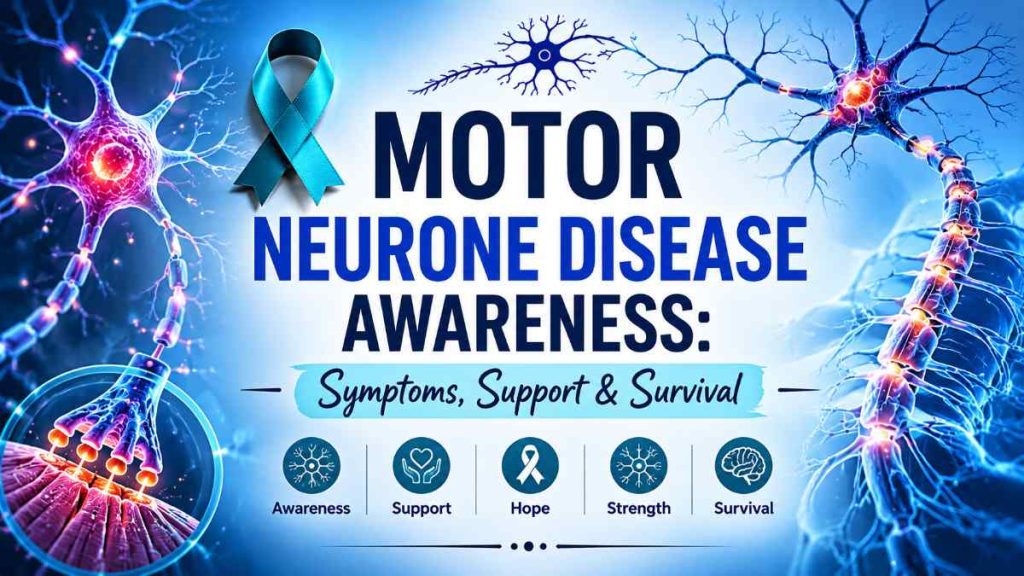
This guide gives you everything you need: what MND is, how it starts, how it progresses, what treatments exist today, and where to find real support. Whether you are a patient, a carer, or simply someone who wants to understand this condition better, you are in the right place.
2. What Is Motor Neurone Disease (MND)?
Motor Neurone Disease is an umbrella term for a group of conditions that cause the progressive degeneration of motor neurones — the specialised nerve cells that send signals from the brain to the muscles.
When motor neurones die, the muscles they control gradually weaken and waste away. Over time, this affects movement, speech, swallowing, and eventually breathing.
MND is also known as ALS (Amyotrophic Lateral Sclerosis) in North America and many parts of the world. In the United States, people commonly call it Lou Gehrig’s Disease, named after the famous baseball player diagnosed in 1939.
Crucially, MND does not affect thinking, memory, or the senses in most cases. The person inside remains fully aware — which makes the physical decline even more emotionally challenging.
3. How MND Affects the Nervous System
Your nervous system relies on two types of motor neurones to move your muscles:
- Upper motor neurones — carry signals from the brain down to the spinal cord.
- Lower motor neurones — carry signals from the spinal cord out to the muscles.
In MND, one or both types begin to break down. When upper motor neurones are damaged, muscles become stiff and spastic. When lower motor neurones are damaged, muscles become weak, wasted, and may twitch involuntarily — a symptom called fasciculations.
In most forms of MND, both types are affected simultaneously. This is why the condition tends to progress quickly and affects multiple body systems at once.
4. Types of Motor Neurone Disease
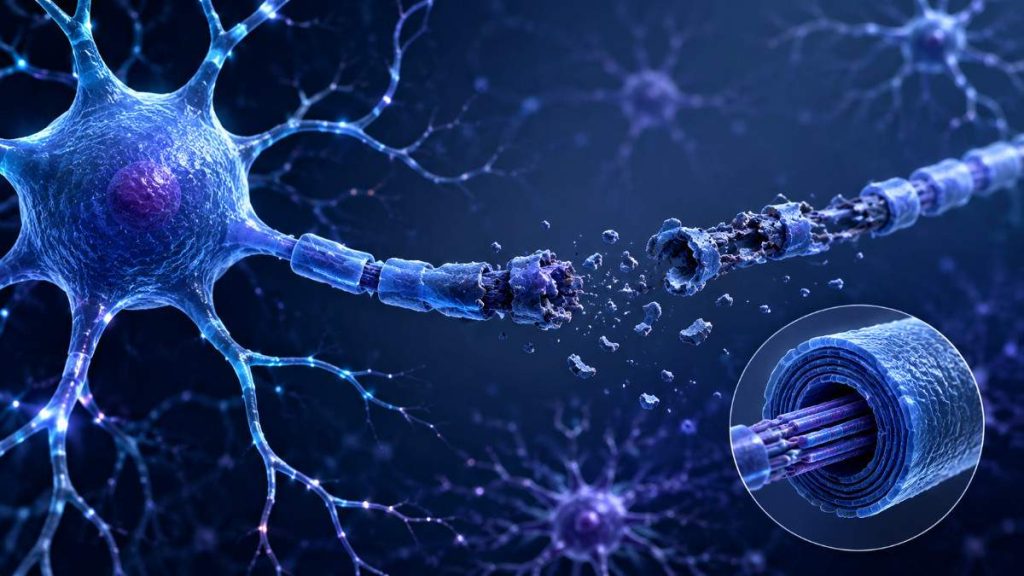
MND is not a single disease. It covers several distinct conditions, each with a slightly different pattern of progression.
Amyotrophic Lateral Sclerosis (ALS)
ALS is the most common form of MND, accounting for around 60–70% of all cases. It affects both upper and lower motor neurones, causing a combination of muscle weakness, stiffness, and wasting. It progresses relatively fast compared to other types.
Progressive Muscular Atrophy (PMA)
PMA affects only the lower motor neurones. It primarily causes muscle wasting in the hands, arms, and legs. It progresses more slowly than ALS, and some people live for many years after diagnosis.
Progressive Bulbar Palsy (PBP)
PBP affects the brainstem — the area controlling speech, swallowing, and chewing. These functions are usually impacted first, making communication and eating early challenges. PBP can overlap with or progress into ALS over time.
Primary Lateral Sclerosis (PLS)
PLS affects only the upper motor neurones and is the slowest-progressing type of MND. It primarily causes stiffness and spasticity rather than muscle wasting. Most people with PLS have a near-normal life expectancy, though it is a serious, life-altering condition.
Kennedy’s Disease (SBMA)
Kennedy’s Disease is a rare inherited form of MND that affects only males. It progresses slowly and is often associated with hormonal changes. Life expectancy in Kennedy’s Disease is usually close to normal.
5. Early Symptoms of MND
MND often starts subtly — so subtly that many people dismiss the first signs for months. Recognising them early leads to faster diagnosis and better care planning.
Common early warning signs include:
- Muscle weakness in the hands, arms, or legs
- Tripping or stumbling unexpectedly while walking
- Slurred or slightly unclear speech
- Difficulty gripping objects — dropping cups, pens, or keys
- Muscle cramps or twitching (fasciculations)
- Fatigue that seems out of proportion to your activity level
- Difficulty swallowing certain foods or liquids
Important: These symptoms can also result from many other, less serious conditions. Only a qualified neurologist can make a definitive diagnosis. If you notice persistent weakness or muscle changes, see your doctor promptly — do not self-diagnose.
6. Advanced Symptoms and Disease Progression
As MND progresses, symptoms gradually spread to other parts of the body. The rate varies widely between individuals — some people decline rapidly within 12–18 months, while others live with the condition for a decade or more.
Advanced symptoms typically include:
- Mobility loss — difficulty standing, walking, and eventually moving in bed
- Respiratory weakness — shortness of breath, especially at night or when lying flat
- Severe dysphagia — difficulty swallowing that may require a feeding tube
- Complete loss of speech — communication switches to devices or eye-gaze technology
- Emotional lability — uncontrollable laughing or crying (known as pseudobulbar affect)
- Significant weight loss and malnutrition due to swallowing difficulties
Importantly, bowel and bladder control, eye movements, and cognitive ability are usually preserved throughout the disease. However, around 5–15% of patients do develop frontotemporal dementia alongside MND.
7. Causes and Risk Factors of MND
Researchers still do not fully understand what causes most cases of MND. The leading theory is that multiple factors interact over time to trigger motor neurone degeneration.
Suspected contributing factors:
- Genetic mutations — especially in the SOD1, C9orf72, TARDBP, and FUS genes
- Protein misfolding — toxic protein clumps that accumulate and damage neurons
- Oxidative stress — free radicals that damage nerve cells over time
- Mitochondrial dysfunction — impaired energy production inside neurons
- Neuroinflammation — chronic inflammation in brain and spinal cord tissue
- Environmental exposures — some evidence links heavy metals, pesticides, and military service to increased risk
Known risk factors:
- Age over 50 (risk increases significantly with age)
- Male sex (men are approximately 1.5 times more likely to develop ALS)
- Family history of MND or frontotemporal dementia
- Military service (higher rates consistently observed in veterans)
- Smoking (linked to a modest increased risk)
8. Is Motor Neurone Disease Genetic?
Around 90% of MND cases are sporadic — meaning they occur without any clear family history. The remaining 10% are familial (inherited), meaning a genetic mutation has been passed down through generations.
The most common genetic cause in familial MND is a mutation in the C9orf72 gene, accounting for roughly 40% of inherited cases. Mutations in the SOD1 gene are also well-studied and linked to both familial and some sporadic cases.
If you have a close family member with MND, speak to your GP about a referral for genetic counselling. A genetic test can assess your personal risk, though it is important to consider the psychological implications carefully before going ahead.
9. When to See a Doctor
See your GP promptly if you notice:
- Unexplained, progressive muscle weakness — especially in one limb or body area
- Speech changes that persist beyond a few weeks
- Persistent muscle twitching across multiple body areas
- Difficulty swallowing that is gradually getting worse
- Breathing that feels laboured during normal, everyday activities
GPs typically refer patients to a neurologist for further investigation. Early diagnosis allows earlier access to specialist MND clinics, supportive therapy, and care planning — all of which significantly improve quality of life.
10. How MND Is Diagnosed
There is no single test that definitively diagnoses MND. Neurologists use a combination of clinical assessment and investigations to rule out other conditions and confirm the diagnosis.
Diagnostic tools include:
- Electromyography (EMG) — measures electrical activity in muscles to detect lower motor neurone damage
- Nerve Conduction Studies (NCS) — tests the speed of nerve signals to identify nerve damage patterns
- MRI Brain and Spine — rules out structural causes such as tumours or disc disease
- Blood tests — check for metabolic, inflammatory, or genetic causes
- Lumbar puncture — occasionally used to exclude inflammatory conditions
- Genetic testing — offered when familial MND is suspected
Diagnosis often takes 9–12 months from the first symptom onset. This diagnostic delay is a significant challenge that researchers are actively working to reduce — with AI-based biomarker tools showing real promise in speeding up the process.
11. Treatment Options for MND
There is currently no cure for MND. However, treatments can meaningfully slow progression, manage symptoms, and extend quality of life. Research is advancing rapidly, and several promising therapies are in late-stage clinical trials right now.
The most effective approach is multidisciplinary care — a team including a neurologist, physiotherapist, speech therapist, dietitian, respiratory specialist, occupational therapist, and palliative care nurse working together around the patient.
12. Medicines Used for MND Treatment
Riluzole
Riluzole is the longest-established drug treatment for ALS. It works by reducing excess glutamate — a neurotransmitter that, in high levels, is toxic to motor neurones. Studies show it can extend survival by approximately 2–3 months and may slow functional decline. It is typically taken as a tablet twice daily and is generally well-tolerated.
Edaravone (Radicava)
Edaravone is an antioxidant drug approved in Japan, the USA, and several other countries. It works by neutralising the free radicals that damage nerve cells. Clinical trials showed it significantly reduced the rate of functional decline — particularly in patients who are in the earlier stages of the disease.
Tofersen (Qalsody)
Approved by the US FDA in 2023, Tofersen is a gene-targeted therapy specifically for patients with SOD1 mutations. It works by reducing production of the toxic SOD1 protein. This marks a major milestone — the first precision medicine approach approved for any form of MND.
Beyond disease-modifying drugs, doctors also prescribe medications for muscle cramps, spasticity, excess saliva, pain, emotional lability, and sleep disturbance. Managing these symptoms day to day makes an enormous difference to overall wellbeing.
13. Managing Symptoms and Daily Life
Living well with MND requires proactive planning and a supportive team. The earlier you engage with specialist care, the better equipped you are for each stage of the disease.
Practical daily adjustments often include:
- Using grab rails, ramps, and mobility aids to maintain independence at home
- Switching to voice-controlled devices and smart home technology
- Adapting clothing and utensils to accommodate reduced hand strength
- Pacing activities to conserve energy throughout the day
- Planning rest periods and prioritising what matters most
Occupational therapists are invaluable partners in this process. They assess your home environment, recommend equipment, and help you adapt tasks so you can do more for longer.
14. Physiotherapy and Supportive Care
Physiotherapy helps maintain mobility, reduce stiffness, and prevent contractures for as long as possible. A physiotherapist will recommend safe exercise, stretching programmes, and appropriate mobility aids at each stage of the disease.
Regular, gentle exercise — guided by a professional — has been shown to preserve function and improve mood in people with MND. The key is finding the right balance: enough activity to maintain strength without causing excessive fatigue.
Hydrotherapy (exercising in warm water) is particularly popular among MND patients because it reduces the load on weakened muscles while allowing a greater range of movement.
15. Breathing, Mobility, and Communication Support
Breathing Support
As breathing muscles weaken, Non-Invasive Ventilation (NIV) — delivered through a mask, typically at night — becomes essential. NIV has been shown to extend life by several months and significantly improves sleep quality, daytime energy, and overall comfort.
Mobility Support
Wheelchairs, powered scooters, stairlifts, ceiling hoists, and hospital-grade adjustable beds all help people with MND maintain dignity and independence. Equipment is usually provided through NHS community services, MND associations, or social care assessments.
Communication Support
Speech and language therapists introduce communication strategies early — ideally before speech deteriorates significantly. Key tools include:
- Voice banking — recording your natural voice before it changes, to be used in a speech device later
- Low-tech boards — letter or symbol boards for when speech becomes difficult
- Eye-gaze technology — computer systems controlled entirely through eye movement, allowing people to write, browse, and communicate with full sentences
16. Mental Health and Emotional Support for Patients
An MND diagnosis is life-altering. Feelings of grief, fear, anger, and depression are completely natural — for both the patient and their loved ones. These emotions do not reflect weakness. They reflect the reality of facing a serious illness with courage.
Support options include:
- Psychological counselling with an MND-experienced therapist
- Peer support groups (in-person and online) — connecting with people who truly understand
- Carer support groups — because family members and carers need support too
- Palliative care teams who provide emotional as well as physical care
- Spiritual and pastoral support, where that is meaningful to the individual
Many people find that talking openly about their fears and wishes — including end-of-life planning — brings genuine peace rather than despair. Advance care planning gives patients control over what happens, on their own terms.
17. Living With MND: Survival and Quality of Life
The average life expectancy after an ALS diagnosis is 2 to 5 years. However, this is an average — and real life is far more varied than any statistic can capture. Around 10% of people with ALS live beyond 10 years. Stephen Hawking famously lived for 55 years after his diagnosis, though his case was exceptionally rare.
Factors that influence survival include the type of MND, age at diagnosis, whether breathing muscles are affected early, and access to specialist multidisciplinary care.
Quality of life can remain meaningful — and even joyful — throughout the journey. Many patients use their diagnosis as a catalyst to deepen relationships, pursue creative projects, and advocate for others. Adaptive technologies have transformed what is possible, from writing books to giving public talks using eye-gaze technology.
18. Complications of Motor Neurone Disease
The most serious complications of MND include:
- Aspiration pneumonia — food or liquid entering the lungs due to swallowing difficulties
- Respiratory failure — the most common cause of death in MND
- Malnutrition and dehydration — if swallowing problems are not managed proactively
- Pressure sores — in patients with severely reduced mobility
- Depression and anxiety — affecting quality of life significantly if left untreated
- Social isolation — due to communication and mobility challenges
Early, proactive management of each of these complications can significantly extend comfort and survival. This is why specialist MND clinic care makes such a measurable difference.
19. Can MND Be Prevented?
Honestly, there is currently no proven way to prevent MND. Because the exact cause remains unknown in the majority of cases, it is not yet possible to reliably reduce individual risk.
That said, some general healthy lifestyle measures may offer a modest protective effect:
- Not smoking
- Regular moderate exercise
- Minimising unnecessary exposure to environmental toxins
For those with a family history of MND, genetic counselling is the recommended first step — rather than attempting unproven preventive measures or unnecessary anxiety.
20. Latest Research and Future Treatments
MND research has accelerated significantly over the past decade, driven in part by the extraordinary success of the Ice Bucket Challenge, which raised over $220 million globally for ALS research.
The most exciting research directions right now include:
- Gene therapy — targeting specific mutations with precision. Tofersen (approved 2023 for SOD1-ALS) is just the beginning. Trials for C9orf72 and other mutations are underway.
- Antisense oligonucleotides (ASOs) — precision molecules that switch off harmful genes inside cells without affecting other functions
- TDP-43 targeting — most ALS patients show toxic TDP-43 protein clumping inside neurons. New drugs aim to clear these aggregates before they cause irreversible damage.
- Stem cell therapy — exploring whether transplanted cells can protect or replace dying motor neurones
- AI-based biomarker discovery — using machine learning to detect MND earlier, predict progression, and match patients to the right clinical trials faster
The scientific community is genuinely optimistic. For the first time, we have approved precision medicines for a genetic subtype of MND — and several more are in the pipeline. The momentum is real.
Conclusion
Motor Neurone Disease is one of the most challenging conditions a person and family can face. But it is also a condition surrounded by remarkable courage, rapid scientific progress, and deeply compassionate care.
Understanding MND — its symptoms, types, causes, and treatment options — empowers patients and families to make informed decisions, access support earlier, and plan ahead with clarity rather than fear.
Research is moving faster than ever before. Gene therapies are entering clinics. AI is enabling earlier diagnosis. And every day, neurologists, nurses, and researchers around the world are working relentlessly towards better outcomes.
If you or someone you love is affected by MND, reach out to your national MND association. They exist for exactly this reason — and no one should face this journey alone.
Frequently Asked Questions
Sources & References
- National Institute of Neurological Disorders and Stroke (NINDS). Amyotrophic Lateral Sclerosis (ALS) Fact Sheet. ninds.nih.gov
- MND Association (UK). What is MND? mndassociation.org
- ALS Association (USA). ALS Disease Information. als.org
- Hardiman O, et al. (2017). Amyotrophic lateral sclerosis. Nature Reviews Disease Primers. doi:10.1038/nrdp.2017.71
- Miller RG, et al. (2012). Riluzole for amyotrophic lateral sclerosis/motor neuron disease. Cochrane Database of Systematic Reviews.
- Writing Group; Edaravone (MCI-186) ALS 19 Study Group. (2017). Safety and efficacy of edaravone in well-defined patients with ALS. The Lancet Neurology.
- National Health Service (NHS). Motor neurone disease. nhs.uk
- Chio A, et al. (2009). Prognostic factors in ALS: A critical review. Amyotrophic Lateral Sclerosis.
- US FDA (2023). Qalsody (Tofersen) Approval for SOD1-ALS. fda.gov
- Turner MR, et al. (2023). Controversies and priorities in amyotrophic lateral sclerosis. Journal of Neurology, Neurosurgery & Psychiatry.

 English