
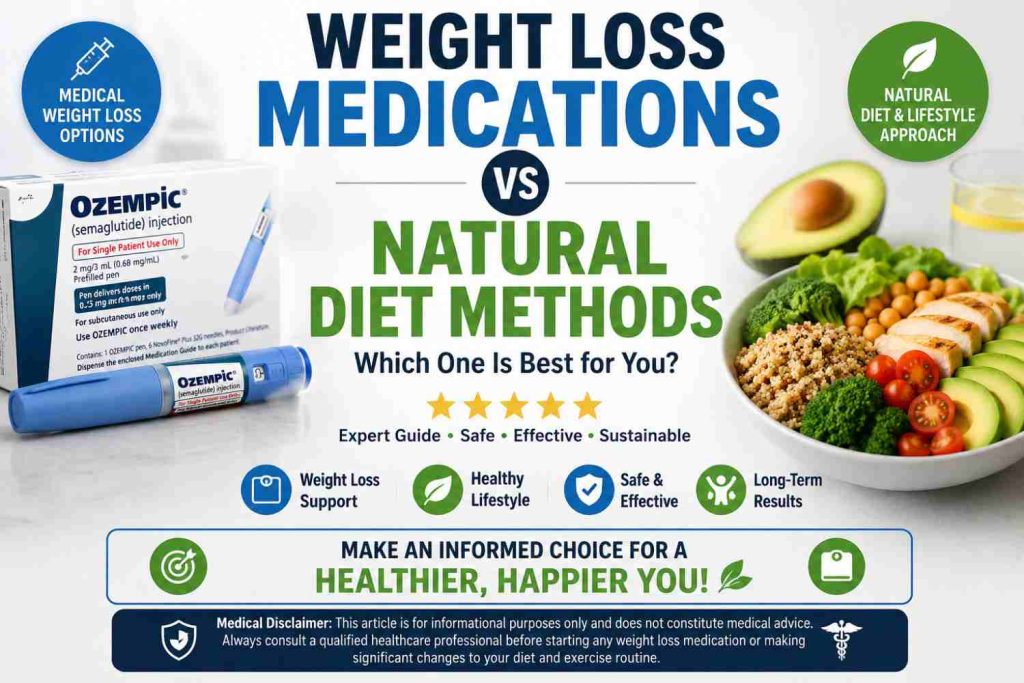
Weight loss has never been a one-size-fits-all journey. For decades, people have tried everything from crash diets and juice cleanses to intense workout programs — with mixed results at best. But as we move deeper into 2026, the conversation has shifted in a big way.
Two very different schools of thought now dominate the wellness world: weight loss medications (especially the buzzy GLP-1 drugs like Ozempic) and natural diet methods built on food, movement, and lifestyle habits.
So which one actually works? Is popping a prescription the modern solution to obesity, or is the old-fashioned “eat less, move more” approach still king? The honest answer is: it depends — and the science behind both options is more nuanced than most headlines let on.
In this article, we’re going to break down everything you need to know about both approaches, side by side, so you can make a truly informed decision for your health.
Medical Disclaimer: This article is for informational purposes only and does not constitute medical advice. Always consult a qualified healthcare professional before starting any weight loss medication or making significant changes to your diet and exercise routine.
What Are Weight Loss Medications?
Weight loss medications are prescription or over-the-counter drugs designed to help people lose body fat by suppressing appetite, reducing fat absorption, or altering metabolism. They’re typically recommended for individuals with obesity (BMI ≥ 30) or for those who are overweight with related health conditions like Type 2 diabetes or high blood pressure.
Medical weight loss methods have evolved significantly. The newest and most talked-about class of drugs belongs to a family called GLP-1 receptor agonists.
GLP-1 Drugs: The Science in Plain English
GLP-1 stands for glucagon-like peptide-1 — a hormone your gut naturally releases after you eat. This hormone tells your brain you’re full, slows down how fast your stomach empties food, and helps regulate blood sugar levels.
GLP-1 medications mimic this hormone artificially. By keeping GLP-1 levels elevated for longer than your body would on its own, these drugs send continuous “I’m full” signals to your brain, which naturally reduces how much you eat.
Popular GLP-1 medications approved for weight loss or weight management as of 2026 include:
- Semaglutide (brand names: Ozempic, Wegovy)
- Tirzepatide (brand names: Mounjaro, Zepbound)
- Liraglutide (brand name: Saxenda)
These are injectable medications taken once a week (for semaglutide) or daily (for liraglutide). Oral versions of semaglutide are also now more widely available, which has changed the accessibility conversation in 2025–2026.
How Ozempic Works
Ozempic (semaglutide) was originally approved by the FDA as a Type 2 diabetes medication, but doctors began noticing something compelling: patients were losing significant weight. This led to the approval of Wegovy (a higher-dose version of semaglutide) specifically for chronic weight management.
Here’s how Ozempic works for weight loss, step by step:
- You inject it once a week under the skin — typically in the abdomen, thigh, or upper arm.
- It activates GLP-1 receptors in your brain, particularly in the hypothalamus — the area that controls hunger and satiety.
- Your appetite drops noticeably. Many users describe simply forgetting to eat or feeling full after just a few bites.
- Blood sugar levels stabilize, which reduces cravings for sugary and high-carb foods.
- Stomach emptying slows down, so you feel satisfied for longer after a meal.
Clinical trials have shown that people using semaglutide lost an average of 12–15% of their body weight over 68 weeks, compared to around 2–3% with a placebo. That’s genuinely significant in the world of medical research.
How Natural Diet Methods Help With Weight Loss
Natural diet methods refer to sustainable, food-first approaches that create a calorie deficit — the fundamental principle behind all fat loss — without relying on pharmaceuticals.
These methods work by retraining your eating habits, improving metabolic health, and building a lifestyle that naturally supports a healthy weight. And unlike medications, they have essentially zero dangerous side effects when done correctly.
The most science-backed natural approaches include:
- Whole-food, plant-forward diets rich in fiber, lean protein, and complex carbohydrates
- Mediterranean diet, consistently ranked as one of the most effective and sustainable eating patterns
- Low-carbohydrate and ketogenic diets, which use fat as the body’s primary fuel source
- Intermittent fasting, where you cycle between eating and fasting windows to reduce overall calorie intake
- Mindful eating, a practice that slows down eating and improves your awareness of hunger and fullness cues
None of these are quick fixes. But every single one is backed by solid evidence showing long-term weight reduction, improved cardiovascular health, and better metabolic markers — without a prescription.
Benefits of Weight Loss Medications
Let’s be fair about what medications actually do well. For certain people, weight loss drugs can be genuinely life-changing tools.
Here are the key benefits:
Clinically significant weight loss Clinical studies on semaglutide and tirzepatide have shown weight reductions that were previously only seen with bariatric surgery. For severely obese individuals, this can be medically critical.
Blood sugar and cardiovascular improvements Beyond the number on the scale, GLP-1 drugs have been shown to lower HbA1c (a marker of long-term blood sugar), reduce blood pressure, and in some studies, lower the risk of heart attack and stroke.
Appetite suppression that feels effortless One of the biggest struggles of dieting is fighting constant hunger. Ozempic and similar drugs quiet what researchers call “food noise” — the constant mental chatter about eating that many people with obesity experience. For many users, this is a revelation.
Reduced food cravings Users frequently report reduced cravings for ultra-processed foods, alcohol, and sweets — effects that go beyond simple calorie restriction.
Support for people who have tried and failed with diet alone Obesity is a complex, multi-factor disease. Some people have hormonal, genetic, or neurological barriers to weight loss that diet alone cannot overcome. Medications provide a pharmacological bridge.
Risks and Side Effects of Ozempic and Similar Drugs
This is where an honest conversation becomes essential. Semaglutide side effects are real, and some of them are serious. Before considering any GLP-1 medication, you need a full picture.
Common Side Effects
Most people starting Ozempic experience digestive discomfort, especially in the early weeks:
- Nausea (the most commonly reported side effect — affects up to 44% of users)
- Vomiting
- Diarrhea or constipation
- Stomach pain and bloating
- Acid reflux / heartburn
- Fatigue and low energy, especially early on
These usually improve after the first few weeks as the body adjusts.
Serious but Less Common Risks
| Risk | What to Know |
|---|---|
| Pancreatitis | Inflammation of the pancreas — seek immediate medical care if you have severe abdominal pain |
| Thyroid tumors | Rodent studies showed thyroid C-cell tumors; human risk is still being studied — contraindicated with personal/family history of MTC |
| Gallbladder problems | Gallstones and cholecystitis have been reported with rapid weight loss |
| Muscle loss (“Ozempic body”) | Rapid weight loss without adequate protein and resistance training can lead to significant muscle mass reduction |
| Rebound weight gain | Most studies show significant weight regain within one year of stopping the drug without lifestyle changes |
| Kidney issues | Severe vomiting/diarrhea can cause dehydration, which may stress the kidneys |
| Mental health changes | Emerging reports of depression, anxiety, and suicidal ideation are under active investigation by the FDA |
Always consult your doctor before starting Ozempic or any weight loss medication. This is especially critical if you have a history of thyroid cancer, pancreatitis, kidney disease, or eating disorders.
Benefits of Natural Diet and Lifestyle Changes
Natural fat loss methods don’t make headlines the way Ozempic does, but their track record over decades of research is remarkable.
Sustainable, long-term results People who lose weight through dietary changes and exercise are far more likely to keep it off long-term — especially when the changes are gradual and enjoyable.
No side effects Whole foods, hydration, sleep, and movement don’t carry prescription labels or risk of gallbladder disease.
Whole-body health improvements A healthy diet improves gut microbiome diversity, reduces inflammation, supports hormonal balance, sharpens mental clarity, and promotes skin, hair, and nail health — benefits that go far beyond weight.
Free or low cost No weekly injections, no pharmacy visits, no insurance battles. Whole foods and walking shoes are among the most affordable health investments in existence.
Empowers lasting behavioral change Learning to eat intuitively, cook nourishing meals, and move your body joyfully creates a relationship with health that lasts a lifetime — not just as long as a prescription does.
No rebound risk when built correctly Unlike medication-dependent weight loss, sustainable lifestyle changes don’t result in the same dramatic rebound when “stopped” — because they become part of who you are.
Weight Loss Medications vs Natural Diet: Key Differences
Here’s a clear, side-by-side comparison to help you see the full picture:
| Factor | Weight Loss Medications | Natural Diet Methods |
|---|---|---|
| Speed of results | Faster (visible results in weeks) | Slower (months to years) |
| Sustainability | Moderate (depends on lifestyle changes) | High (when habits are formed) |
| Cost | High ($800–$1,500/month without insurance) | Low to moderate |
| Side effects | Yes — digestive, and some serious | Minimal when done correctly |
| Requires prescription | Yes | No |
| Rebound risk | High if stopped without lifestyle changes | Low with gradual habit formation |
| Overall health benefits | Significant (metabolic, cardiovascular) | Comprehensive (whole-body health) |
| Best suited for | Obesity (BMI ≥ 30) or BMI ≥ 27 with comorbidities | Anyone, from minor to moderate weight goals |
| Medical supervision needed | Yes, always | Recommended but not always required |
Which Method Gives Faster Results?
Let’s be direct: weight loss medications produce faster, more dramatic short-term results.
In clinical trials, people using Wegovy (high-dose semaglutide) lost an average of 15% of their body weight over about 16 months. Tirzepatide studies showed even more impressive numbers — some participants lost over 20% of body weight.
By contrast, a well-designed natural diet and exercise program typically produces 0.5 to 1 kg (1 to 2 lbs) of weight loss per week in a healthy, sustained calorie deficit. That’s about 4–8 kg (8–17 lbs) over three months — meaningful, but more gradual.
However, “faster” doesn’t always mean “better” here, for two big reasons:
- Rapid weight loss without resistance training leads to significant muscle loss — a documented concern with GLP-1 medications that can slow metabolism long-term.
- The weight often returns when medication stops unless lifestyle habits have been built alongside the drug.
The bottom line: If speed is your primary concern and you meet the clinical criteria, medication wins in the short term. If lasting transformation is the goal, natural methods — or a combination approach — build a far more durable foundation.
Can You Combine Ozempic With Healthy Eating?
Absolutely — and honestly, this is what most weight loss experts recommend when medications are appropriate.
Ozempic and healthy eating aren’t opposites. They’re actually a surprisingly powerful partnership. Here’s why:
The medication handles the biological side: It quiets hunger signals, reduces cravings, and stabilizes blood sugar — removing the physical barriers that make dieting feel impossible for many people.
Healthy eating handles the long-term side: It ensures you’re getting the nutrients your body needs during rapid weight loss, helps preserve lean muscle mass, supports gut health, and builds the habits you’ll need when (and if) the medication is eventually stopped.
If you’re using Ozempic or a similar GLP-1 medication, here are the most important dietary adjustments to pair with it:
- Prioritize protein at every meal (aim for 25–30g per meal) to minimize muscle loss
- Eat small, frequent, low-fat meals to reduce nausea — a common early side effect
- Stay hydrated — dehydration worsens nausea and can affect kidney health
- Avoid greasy, ultra-processed, and high-sugar foods — these amplify digestive side effects
- Include plenty of fiber from vegetables, legumes, and whole grains for gut health
- Don’t skip meals — under-eating on medication can lead to extreme fatigue and nutrient deficiencies
Best Foods for Sustainable Weight Loss
Whether you’re on medication or going the all-natural route, food quality matters enormously for long-term, healthy weight loss.
Protein Powerhouses
- Eggs, chicken breast, turkey
- Fatty fish (salmon, sardines, mackerel)
- Greek yogurt, cottage cheese
- Lentils, chickpeas, black beans
- Tofu and tempeh
Protein keeps you fuller longer, preserves muscle during a calorie deficit, and has the highest thermic effect of any macronutrient — meaning your body burns more calories just digesting it.
Fiber-Rich Foods
- Leafy greens (spinach, kale, arugula)
- Cruciferous vegetables (broccoli, cauliflower, Brussels sprouts)
- Berries (blueberries, raspberries, strawberries)
- Oats, quinoa, barley
- Chia seeds and flaxseeds
Fiber slows digestion, feeds healthy gut bacteria, and acts as a natural appetite suppressant without any pharmaceutical help.
Healthy Fats (Yes, Really)
- Avocado and avocado oil
- Extra virgin olive oil
- Walnuts, almonds, cashews
- Fatty fish
Healthy fats improve satiety hormones and reduce inflammation — both of which are critical for managing weight sustainably.
What to Limit
- Ultra-processed snack foods and fast food
- Refined carbohydrates (white bread, sugary cereals)
- Sugar-sweetened beverages (sodas, juices, energy drinks)
- Excess alcohol (7 calories per gram — more than protein or carbs)
Exercise and Sleep in Weight Management
Diet gets most of the credit for weight loss — and rightly so, since nutrition creates the majority of the calorie deficit. But exercise and sleep are not optional extras. They’re foundational.
Exercise: Your Metabolic Investment
The best exercise for natural fat loss combines:
- Resistance/strength training (2–4x per week): Builds and preserves lean muscle, which keeps your resting metabolism high. This is especially critical if you’re on GLP-1 medication to combat muscle loss.
- Cardiovascular activity (150–300 min/week of moderate intensity): Walking, cycling, swimming, dancing — anything that raises your heart rate burns calories and improves heart health.
- Daily movement (NEAT): Non-exercise activity thermogenesis — the calories you burn walking to the shop, taking the stairs, cooking — adds up massively. People who are naturally lean often simply move more throughout the day.
Sleep: The Underrated Weight Loss Tool
Here’s something that doesn’t get enough attention: poor sleep directly sabotages weight loss, even if your diet is perfect.
When you’re sleep-deprived:
- Ghrelin (your hunger hormone) spikes
- Leptin (your fullness hormone) drops
- Cortisol rises, promoting fat storage — particularly around the abdomen
- Cravings for sugary, calorie-dense foods intensify
- Your decision-making weakens, making healthy choices much harder
Aim for 7–9 hours of quality sleep per night. It’s not a luxury — it’s a biological requirement for healthy weight management.
In 2026, sleep optimization has become one of the hottest trends in wellness, with chronobiology (the study of body clocks) now being integrated into personalized weight loss programs.
Who Should Avoid Weight Loss Medications?
Weight loss medications are not suitable for everyone. Your doctor will assess your full medical history, but here are the general groups for whom these drugs are typically not recommended:
- Pregnant or breastfeeding women — GLP-1 drugs are contraindicated during pregnancy
- People with a personal or family history of medullary thyroid carcinoma (MTC) or Multiple Endocrine Neoplasia syndrome type 2 (MEN2)
- People with a history of pancreatitis — the risk may be elevated with GLP-1 use
- Individuals with a history of eating disorders — medications that suppress appetite can be psychologically harmful
- Children and adolescents — approved age thresholds vary; pediatric use is still evolving
- People with severe kidney or liver disease — dose adjustments or avoidance may be needed
- Those with certain mental health conditions — pending FDA investigations into mood-related side effects warrant caution
- Anyone not under medical supervision — these are prescription drugs for a reason
Again: please speak with a qualified healthcare professional before starting any weight loss medication.
Expert Tips for Safe and Healthy Fat Loss
Whether you choose medication, natural methods, or a combination, these expert-endorsed principles apply universally:
- Set realistic goals. A safe, sustainable rate of weight loss is 0.5–1% of your body weight per week. Faster is not better for long-term success.
- Prioritize protein. Aim for 1.2–1.6 grams of protein per kilogram of body weight, especially during active weight loss. This protects your muscle and keeps hunger in check.
- Don’t demonize food groups. Sustainable fat loss doesn’t require eliminating carbs, fats, or entire food groups. Balance is not a buzzword — it’s biology.
- Manage stress actively. Chronic stress elevates cortisol, which promotes fat storage and triggers emotional eating. Yoga, meditation, walking in nature, and journaling are all evidence-backed tools.
- Track what matters — but not obsessively. Keeping a food diary or using a nutrition app increases awareness and accountability. But obsessive tracking can trigger disordered eating in some individuals. Know your relationship with food.
- Build your support system. Research consistently shows that social support improves weight loss outcomes. Whether it’s a friend, online community, or registered dietitian — don’t go it alone.
- Focus on health behaviors, not just the scale. Improvements in energy, sleep, blood pressure, and mood are signs that your body is getting healthier — even if the scale moves slowly.
- Consult a registered dietitian. For personalized guidance that accounts for your medical history, food preferences, and lifestyle — a registered dietitian (RD) is your best ally.
Frequently Asked Questions
Q1: Is Ozempic safe for weight loss if I’m not diabetic? Ozempic is FDA-approved for Type 2 diabetes management. Its higher-dose version, Wegovy, is approved specifically for chronic weight management in non-diabetic individuals with a BMI of 30 or above (or 27+ with weight-related health conditions). Always consult your doctor before use.
Q2: How long does it take to see weight loss results with Ozempic? Most people begin noticing reduced appetite within the first 1–2 weeks. Visible weight loss typically becomes apparent within 4–8 weeks, with more significant results at the 3–6 month mark as dosing increases gradually.
Q3: Can I lose weight naturally without going to the gym? Yes. While exercise significantly improves results and overall health, weight loss is primarily driven by a calorie deficit from diet. Walking, home workouts, swimming, cycling, and everyday movement (NEAT) are all effective without a gym membership.
Q4: What happens when you stop taking Ozempic? Most research shows that a significant proportion of lost weight returns within 1–2 years of stopping semaglutide, particularly if lifestyle habits haven’t changed. This is why experts emphasize building healthy eating and exercise habits alongside medication use.
Q5: Are natural diet methods better for long-term weight loss than medications? Natural diet and lifestyle changes tend to produce more durable long-term results when consistently followed, mainly because they address the root behaviors behind weight gain. Medications are powerful tools but work best when paired with lifestyle change.
Q6: What is the best natural appetite suppressant? High-protein foods, high-fiber vegetables, legumes, and adequate water intake are among the most effective natural appetite suppressants. Getting enough sleep and managing stress also powerfully regulate hunger hormones.
Q7: Can teens use weight loss medications? Liraglutide (Saxenda) has been FDA-approved for adolescents aged 12 and above with obesity. Semaglutide’s pediatric use is still under study. Any use in minors must be under careful medical supervision and is not appropriate as a cosmetic weight loss tool.
Q8: What foods should I avoid on Ozempic? High-fat, greasy, fried, and heavily processed foods tend to worsen nausea and digestive side effects. Alcohol should be minimized. Small, balanced, protein-rich meals are generally much better tolerated.
conclusion
Here’s the honest, nuanced truth most wellness articles won’t give you:
Neither approach is universally superior — but they suit different people, goals, and circumstances.
Choose weight loss medications if:
- You have a BMI of 30+ or BMI 27+ with obesity-related health conditions
- You have tried diet and exercise seriously for an extended period without meaningful success
- You are under the care of a qualified physician who has assessed your full health picture
- You understand the side effects, costs, and the importance of pairing medication with lifestyle changes
Choose natural diet methods if:
- You have mild to moderate weight to lose
- You don’t meet the clinical criteria for medication use
- You want a lifelong, empowering relationship with food and your body
- You are pregnant, have a history of eating disorders, or fall into any contraindicated category
The smartest approach for most people? A thoughtful combination — where medication (if appropriate) provides a biological head start, and healthy eating, regular exercise, quality sleep, and stress management build the habits that last long after any prescription ends.
Weight loss is not a race. It’s a long-term investment in the life you want to live. Whether you choose the pharmaceutical route, the natural path, or a blend of both — be patient, be consistent, and work with professionals who understand your unique body.
Sources & References
The following trusted medical and health organizations were used as reference sources for this article. All content has been independently researched, summarized, and written in original wording to maintain accuracy and avoid copyright issues.
- Mayo Clinic – https://www.mayoclinic.org/
(Information related to Ozempic, GLP-1 medications, obesity treatment, and healthy weight management) - Healthline – https://www.healthline.com/
(Research and educational content about semaglutide side effects, natural fat loss, and GLP-1 drugs) - WebMD – https://www.webmd.com/
(General information about weight loss medications, nutrition, and healthy lifestyle habits) - Cleveland Clinic – https://my.clevelandclinic.org/
(Medical guidance on Ozempic for weight loss, obesity care, and healthy eating strategies) - Harvard Health Publishing – https://www.health.harvard.edu/
(Evidence-based information on Mediterranean diet, exercise, metabolism, and sleep health) - World Health Organization (WHO) – https://www.who.int/
(Global obesity statistics, public health recommendations, and healthy diet guidelines) - National Institutes of Health (NIH) – https://www.nih.gov/
(Clinical studies and scientific research related to GLP-1 medications, semaglutide, and dietary interventions)

 English