
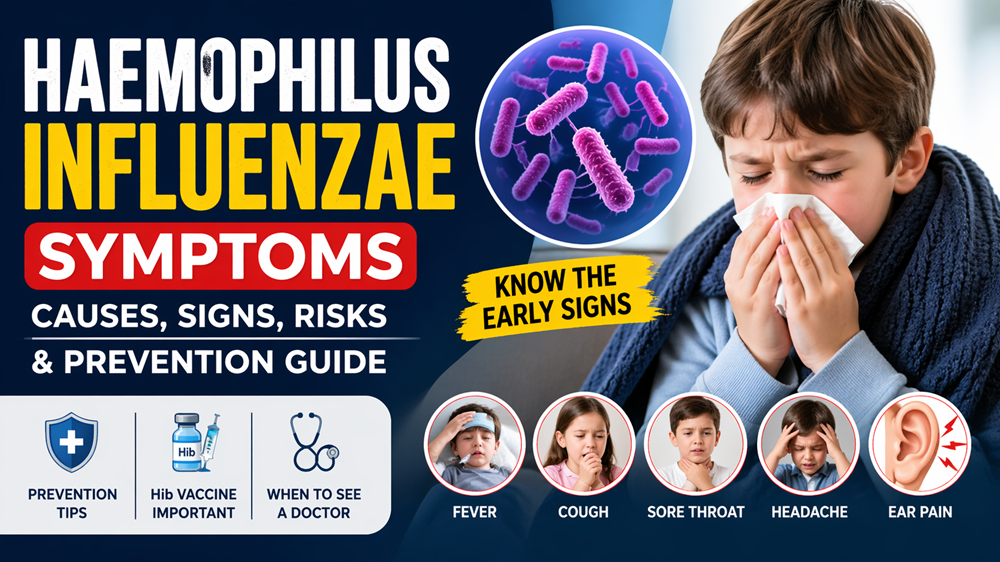
Most people have never heard of Haemophilus influenzae — and those who have often assume it is somehow related to the flu. It is not. Despite the misleading name, this is a bacterium, not a virus, and it is responsible for a wide range of infections that can affect anyone from newborns to the elderly.
Haemophilus influenzae can live harmlessly in the nose and throat of healthy individuals. In many cases, it causes no illness at all. But when conditions shift — when immunity is low, when a child is too young to have been vaccinated, or when a chronic illness leaves the body vulnerable — this bacterium can invade the lungs, bloodstream, ears, sinuses, and even the brain.
What makes this infection particularly important to understand is the gap between how it starts and how serious it can become. Early symptoms often look like an ordinary cold. Left unrecognized or untreated, the same infection can progress to pneumonia, meningitis, or life-threatening sepsis within days.
Awareness is the first line of defense. Knowing what H. influenzae is, how it spreads, what symptoms to watch for, and when to seek medical care can make a decisive difference in outcomes — especially for young children, older adults, and those with weakened immune systems.
What is Haemophilus Influenzae?
Haemophilus influenzae is a gram-negative bacterium first identified in 1892 during an influenza pandemic. At the time, scientists mistakenly believed it caused the flu — hence the name. We now know influenza is caused by a virus. The two have nothing in common beyond a historical naming error.
The bacterium exists in two broad forms. Typeable (encapsulated) strains — labeled types a through f — carry a protective outer capsule. Type b, known as Hib, was historically the most dangerous, causing severe invasive infections like meningitis and epiglottitis, particularly in children under five. Vaccination has dramatically reduced Hib disease in countries with strong immunization programs.
Non-typeable strains (NTHi) lack this capsule and are now the more commonly encountered form. They are responsible for ear infections, sinus infections, bronchitis, and respiratory flare-ups — especially in adults with chronic lung conditions like COPD or asthma. Importantly, the Hib vaccine does not protect against non-typeable strains.
Understanding this distinction matters because the two types cause different kinds of infections, affect different populations, and require different approaches to prevention.
Causes and How It Spreads
Haemophilus influenzae spreads from person to person through respiratory droplets — the tiny particles released when someone coughs, sneezes, or talks. These droplets can be inhaled directly or picked up from contaminated surfaces and transferred to the mouth, nose, or eyes through hand contact.
Many people carry the bacteria without ever developing an infection. These silent carriers can unknowingly pass it on to others who may be more vulnerable. This is why outbreaks often occur in settings where people are in close, repeated contact — daycare centers, schools, nursing homes, and crowded households.
Several factors increase the likelihood of developing active disease. Infants and toddlers are at high risk because their immune systems are still developing. The elderly face increased risk as immunity naturally weakens with age. People with conditions that impair immune function — such as HIV, cancer, sickle cell disease, or those who have had their spleen removed — are significantly more vulnerable to invasive infections. Adults with chronic lung conditions face a higher risk of respiratory infections from NTHi strains. And individuals who have not received the Hib vaccine remain at risk for type b invasive disease.
Early Signs and Symptoms
The earliest stage of a Haemophilus influenzae infection is often indistinguishable from a common cold. This is both the challenge and the danger — because the window for early intervention is also the window when the infection looks its most ordinary.
Initial symptoms typically include a low-grade fever, mild sore throat, runny or stuffy nose, a slight cough, and general fatigue. In young children, reduced appetite and increased fussiness may be the first noticeable signs.
The key warning flag is trajectory. A typical cold follows a predictable arc: symptoms peak around days two to three and gradually improve over the following week. H. influenzae infections, by contrast, may plateau without improving, or suddenly worsen after a period of seeming stability. Any fever that persists beyond two to three days without clear improvement, or any sudden worsening of respiratory symptoms, warrants medical attention rather than a “wait and see” approach.
Common Symptoms in Detail
Fever is among the most consistent signs across all types of H. influenzae infections. In mild infections, it tends to stay low-grade — around 37.5 to 38.5°C. In severe infections like meningitis or sepsis, it can spike to 39–40°C or higher. In very young infants, unusually low body temperature (hypothermia) can sometimes signal serious infection instead of fever.
Cough varies depending on which part of the respiratory tract is involved. Early infections produce a dry, irritating cough. As the infection moves into the lower airways, the cough becomes productive — bringing up discolored mucus. A cough that worsens progressively, particularly when accompanied by fever, should be evaluated by a healthcare provider.
Sore throat and nasal symptoms reflect upper respiratory tract involvement. Nasal discharge typically begins clear and watery, becoming thick and yellowish-green as bacterial activity intensifies. Throat soreness may range from mild irritation to significant discomfort.
Fatigue is the body’s signal that it is redirecting resources toward fighting infection. Even in mild cases, fatigue can be pronounced. In serious infections, it becomes overwhelming — patients feel too weak to perform simple daily tasks.
Respiratory, Pneumonia & Meningitis Symptoms
Respiratory Symptoms
When H. influenzae moves into the lower respiratory tract, breathing is visibly affected. Shortness of breath even with mild activity, rapid breathing, and wheezing are common signs. In children, watch for nasal flaring, grunting with each breath, or visible skin pulling in between the ribs — all indicating significant breathing effort. Chest discomfort — ranging from a dull ache to sharp, stabbing pain that worsens with breathing — signals lower respiratory involvement.
Sinus infections caused by H. influenzae typically present with facial pressure or pain around the cheeks and forehead, thick discolored nasal discharge, reduced sense of smell, and persistent headache that worsens when bending forward.
Pneumonia Symptoms
H. influenzae is a significant cause of bacterial pneumonia, particularly in older adults and those with chronic conditions. Pneumonia typically presents with high fever (often 39–40°C), shaking chills, and sharp chest pain that worsens with deep breathing or coughing. Rapid breathing, reduced oxygen exchange, and a productive cough with discolored phlegm are hallmarks.
The systemic impact of bacterial pneumonia is substantial — profound fatigue, loss of appetite, nausea, muscle aches, and in elderly patients, confusion or disorientation that may appear before any respiratory symptoms become obvious.
Meningitis Symptoms
⚠️ Bacterial meningitis is a medical emergency. Seek emergency care immediately if these symptoms are present.
Meningitis — inflammation of the membranes surrounding the brain and spinal cord — is among the most feared complications of H. influenzae type b. The classic triad includes a severe sudden headache (often described as the worst headache of one’s life), neck stiffness that makes it impossible to touch the chin to the chest, and high fever. Vomiting, intense sensitivity to light and sound, and altered mental status frequently accompany these core signs.
In infants and young children, warning signs include a high-pitched, unusual cry, a bulging fontanelle (the soft spot on the skull), extreme and inconsolable irritability, refusal to feed, unusual sleepiness, and a pale or blotchy complexion. A purplish, non-blanching rash — spots that remain visible when pressed — is a critical emergency sign requiring an immediate call to emergency services.
Ear Infection & Sepsis Symptoms
Ear Infection Symptoms
Otitis media — middle ear infection — caused by non-typeable H. influenzae is one of the most common bacterial infections in young children. Ear pain is the defining symptom. Older children and adults can describe it; in infants, look for tugging or pulling at the ears, crying more than usual (particularly when lying down), and unexplained irritability. If the eardrum ruptures under pressure, yellowish or bloody fluid may drain from the ear canal — often accompanied by a sudden reduction in pain as the pressure is relieved.
Hearing becomes muffled and children may seem inattentive or not respond to sounds normally. Recurrent ear infections in early childhood can contribute to lasting hearing difficulties that affect speech and learning development.
Sepsis Symptoms
When H. influenzae enters the bloodstream, it can trigger sepsis — the body’s extreme and life-threatening response to systemic infection.
⚠️ Sepsis can become fatal within hours. Call emergency services immediately if these signs appear.
Sepsis presents with spiking high fever or, paradoxically, dangerously low body temperature. The heart races as the body struggles to maintain blood pressure. Confusion, disorientation, and unusual lethargy signal that the brain is being affected. Skin may appear pale, mottled, or grayish. Breathing becomes rapid and labored. Urine output drops significantly as the kidneys come under stress. A non-blanching purplish rash is a critical emergency sign requiring immediate intervention.
Complications, Diagnosis & Treatment
Complications
Untreated or delayed infections can cause lasting harm. Bacterial meningitis is associated with permanent hearing loss — one of the most common long-term outcomes — as well as neurological complications including hydrocephalus (fluid build-up in the brain), cognitive and developmental delays, seizures, and stroke. Severe pneumonia can lead to pleural effusion (fluid around the lungs) or respiratory failure. Sepsis can progress to septic shock and multi-organ failure.
Diagnosis
Diagnosis requires professional medical evaluation. A physician will assess symptoms, perform a physical examination, and order relevant tests. Blood cultures detect whether bacteria have entered the bloodstream. A lumbar puncture (spinal tap) examines cerebrospinal fluid for signs of meningitis. Chest X-rays evaluate pneumonia and lung complications. Bacterial cultures from blood, CSF, or ear discharge identify the specific strain and its antibiotic sensitivities.
Treatment
⚠️ This is general information only and does not constitute medical advice. Always consult a qualified healthcare provider.
H. influenzae infections are bacterial and are treated with antibiotics prescribed by a healthcare professional. The specific antibiotic, dosage, and course depend on the infection type, severity, patient age, and local resistance patterns. Mild infections may be managed with oral antibiotics on an outpatient basis. Serious infections like meningitis or sepsis require hospitalization, intravenous antibiotics, and close monitoring. Early treatment is directly linked to better outcomes and a lower risk of permanent complications.
Prevention & the Hib Vaccine
Hygiene Practices
Frequent handwashing with soap and water for at least 20 seconds remains one of the most effective ways to interrupt transmission. Covering coughs and sneezes with a tissue or the inside of the elbow, avoiding sharing utensils or personal items with someone who is ill, and keeping frequently touched surfaces clean all reduce the risk of spread.
The Hib Vaccine
The Hib vaccine is the most powerful tool available against invasive H. influenzae type b disease. Before its introduction, Hib was the leading cause of bacterial meningitis in children under five worldwide. Since widespread vaccination began, invasive Hib disease has been reduced by more than 99% in countries with high immunization coverage.
In India, the Pentavalent vaccine — which includes Hib protection along with protection against diphtheria, tetanus, pertussis, and hepatitis B — is part of the Universal Immunisation Programme (UIP), given at 6, 10, and 14 weeks of age. Parents should consult their pediatrician to confirm their child’s vaccination status and schedule.
The Hib vaccine does not protect against non-typeable NTHi strains. There is currently no licensed vaccine for NTHi, making hygiene and early treatment particularly important for respiratory infections caused by these strains.
When to See a Doctor
Seek prompt medical attention for fever lasting more than two to three days without improvement, ear pain in a young child, worsening congestion or facial pain beyond ten days, a persistent productive cough, or any difficulty breathing.
Call emergency services immediately for: a severe sudden headache, stiff neck, high fever with confusion, a non-blanching rash, significant breathing difficulty, seizures, or loss of consciousness. For infants under three months, any fever above 38°C (100.4°F) warrants immediate evaluation — do not wait.
Children vs Adults
| Feature | Young Children | Adults |
|---|---|---|
| Common infections | Ear infections, meningitis, epiglottitis | Pneumonia, sinusitis, bronchitis |
| Main strain concern | H. influenzae type b (Hib) | Non-typeable NTHi |
| Symptom recognition | Atypical — irritability, poor feeding | More classic presentations |
| Speed of deterioration | Can be very rapid | Usually more gradual |
| Highest risk group | Unvaccinated infants and toddlers | Adults with COPD, elderly, immunocompromised |
Conclusion
Haemophilus influenzae is a bacterium with a deceptive reputation — its name suggests a connection to the flu that does not exist, and its early symptoms suggest an ordinary cold that may be anything but. From mild ear infections in toddlers to bacterial meningitis requiring emergency hospitalization, the range of disease it causes is broad, and the consequences of missing it can be serious and permanent.
The most important takeaways are straightforward: know the difference between early and escalating symptoms, understand who is most at risk, ensure children receive the Hib vaccine on schedule, and never hesitate to seek emergency care when serious warning signs appear. Awareness, timely action, and vaccination together form the most effective defense against this often-underestimated pathogen.
📌 Medical Disclaimer: This article is for general informational purposes only and does not constitute medical advice. It should not replace professional medical consultation, diagnosis, or treatment. Always consult a qualified healthcare provider regarding any medical condition or health concern.

 English