
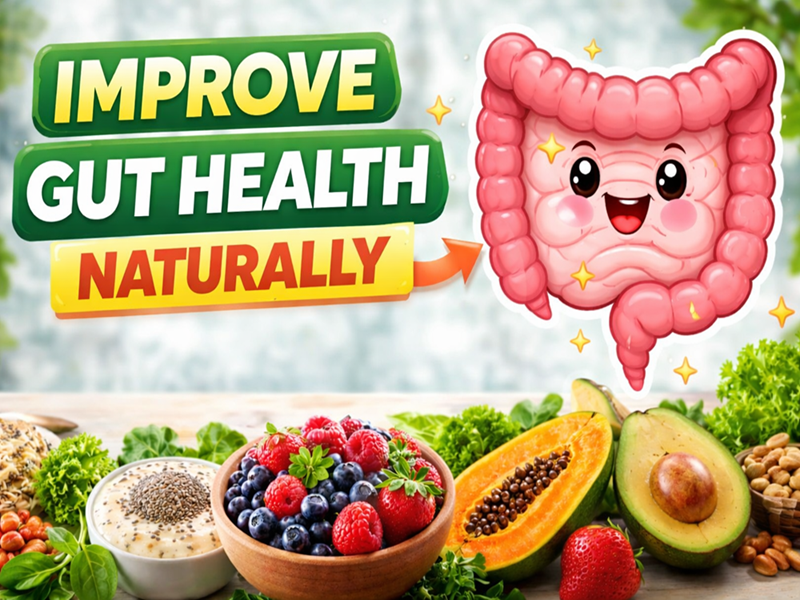
“All disease begins in the gut.” Hippocrates said that 2,400 years ago — and modern science keeps proving him right. If you’ve been wondering how to improve gut health naturally, you’re in the right place. No gimmicks. No expensive supplements. Just honest, practical steps you can actually live by.
Why Your Gut Deserves Attention
Face it: most people are gut-ignorers until their gut starts complaining in some way, like with a little bloating or stomach upset. But let’s face another reality: your gut is actually running the show in ways you’ve never even dreamed of.
In fact, scientists are now calling your gut your second brain, with its own nervous system, cranking out over 90% of your body’s serotonin, and directly connected to your brain through a superhighway called the vagus nerve. When your gut is happy, you’re happy, with healthy skin, energy, a clear and focused brain, and a strong immune system, while a sick gut can have a ripple effect on your entire life.
From mood swings to constant tiredness, brain fog, poor sleep, skin problems, and anxiety, there are many such issues in our daily lives that can actually be related to an unhealthy gut. The best part is that your gut health is something you can easily work on by making some changes in your lifestyle. You do not need a medical degree to work on your gut health. All you need is some awareness.
Understanding the Gut Microbiome
The microbiome is a living and breathing ecosystem in your gut composed of trillions of bacteria, fungi, viruses, and more, weighing in at two kilograms in total. It’s like a tropical rainforest living inside you. As long as the ecosystem is balanced and healthy, everything is working as it should. As soon as a crucial element is eliminated and a bad one takes its place, disaster ensues.
This ecosystem is what helps you digest your food, make vitamins (especially vitamin B12 and vitamin K), train and control your immune system, manage inflammation in your body, and even control how you think, feel, and dream. A study in Cell has shown that your microbiome can completely change in as little as 24 hours based on what you eat, how you sleep, and how you feel.
The most important principle of gut health is diversity. A microbiome with a lot of different types of bacteria is a strong one. As a result, the real secret to how you can improve gut health naturally is not some magic food or supplement you can take; rather, it’s how you can nourish a wide range of good bacteria every day by making a variety of different choices.
Foods That Heal Your Gut
What you put on your plate is the most powerful lever you have. The research is unequivocal: individuals who consume a wide variety of whole, plant-based foods have a diverse gut microbiome, fewer gastrointestinal complaints, and less systemic inflammation.
- Garlic & Onions :Rich in inulin — a prebiotic fibre that selectively feeds beneficial bacteria like Lactobacillus and Bifidobacterium.
- Blueberries & Dark Berries : Packed with polyphenols that act like fertiliser for good gut bacteria and shift the microbiome toward an anti-inflammatory profile.
- Broccoli & Leafy Greens : Contain sulforaphane, which reduces harmful gut bacteria populations while leaving beneficial ones intact.
- Slightly Unripe Bananas : An excellent source of resistant starch — passes through undigested and becomes food for bacteria in the large intestine.
- Legumes & Lentils : Among the most gut-friendly foods available — high in both soluble and insoluble fibre that fuels microbiome diversity.
- Green Tea : Polyphenols selectively encourage anti-inflammatory microbes while suppressing pathogenic bacteria. Two to three cups daily is ideal.
A useful target: aim for 30 different plant foods per week. That includes herbs, spices, nuts, seeds, and every fruit and vegetable you eat. Variety is more important than any single superfood — and far more important than the quantity of any one item.
The Power of Fermented Foods
If there’s one type of food that researchers on gut health agree on as the best, it’s fermented foods. In fact, a 2021 study from Stanford University found that “a high-fermented food diet significantly increased microbiome diversity and reduced inflammation, often more than a high-fiber diet.”
Fermented foods deliver probiotics, which are live beneficial bacteria, directly into your digestive system. In the long run, these probiotics can colonize your digestive tract’s lining, replacing the bad bacteria with the good ones, while also producing short-chain fatty acids, which are the primary energy source for the cells lining your colon.
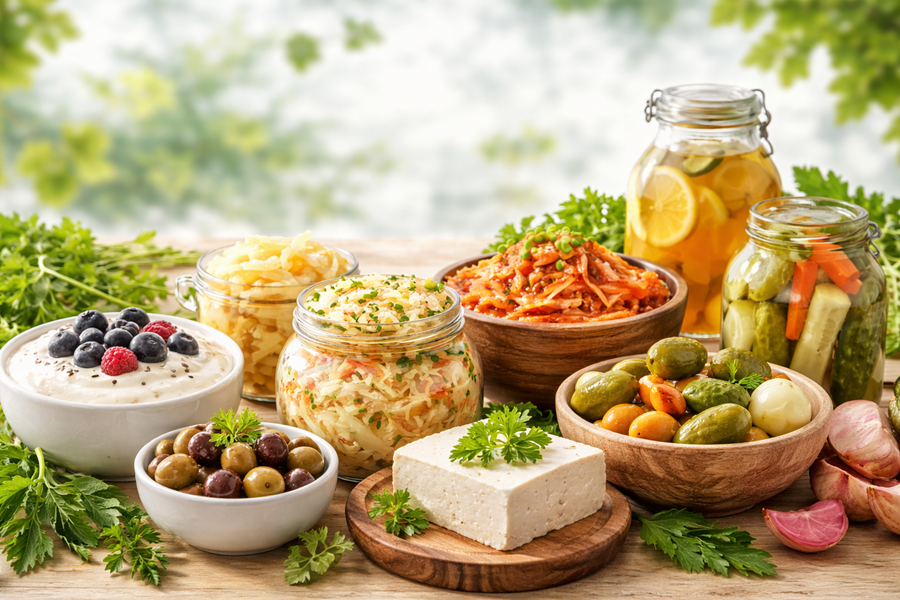
Top Fermented Foods to Try
Plain yoghurt with live cultures, kefir, sauerkraut, kimchi, miso paste, tempeh, and kombucha. Start with a few tablespoons daily and increase gradually as your gut adjusts. Always check labels for “live and active cultures” — pasteurised versions have the beneficial bacteria killed off during processing.
Homemade fermented foods, when prepared safely, are often more potent and far more affordable than store-bought alternatives. Even a simple jar of homemade sauerkraut — just cabbage and salt — delivers billions of live bacteria per serving at virtually no cost.
Fibre: Your Gut’s Best Friend
We really need to have a discussion about fibre – not the tasteless powder form you might find in a supplement, but real food-based fibre. The majority of people in today’s world are consuming less than half of the 30 grams per day that we should be aiming for – and the implications on our gut microbiome are quite serious.
Soluble fibres, like those in oats, apples, psyllium husk, and legumes, are great food sources for good bacteria in the gut because they can dissolve in water. There is also insoluble fibre in grains and most veggies, which is great at keeping things moving along at a good pace in the digestive system. The best way to get these is by including a variety of food sources in your diet.
When your good bacteria in the intestines ferment soluble fibre, short-chain fatty acids are released into your body. Butyrate is a fatty acid that seals the gaps in your intestinal tract and prevents a leaky gut. Butyrate also provides energy for the cells lining your colon and is anti-inflammatory and anti-cancer. There is no supplement out there that compares to the power of fibre in whole foods.
“A diet rich in fibre doesn’t just feed you — it feeds the entire community living inside you. And that community determines a great deal about your long-term health.”
Hydration and Digestive Health
Water is the unsung hero of gut health. Without sufficient hydration, the mucosal lining of the intestines thins, digestion slows, and the passage of food through the digestive system becomes sluggish. Constipation is always caused by a combination of insufficient fiber and water intake. Goals should be established for consumption of a minimum of two liters of water per day. More should be consumed by those who regularly exercise or live in a warm environment. Herbal teas can count toward these goals and have other benefits. Peppermint tea has significant scientific evidence for its use in relieving digestive spasm. Ginger tea aids in the muscular contractions that move food through the digestive system. Warm water with lemon in the morning can stimulate digestive enzymes to begin production, helping to get the digestive system going before breakfast. Room temperature or warm water consumed with meals can have more benefit for digestion than cold water. Cold water can cause transient vessel constriction in the digestive system. This simple adjustment can often have benefits for many people in a short time.
Sleep, Stress, and the Gut-Brain Axis
The reality is, your gut and brain are in constant, real-time, two-way communication with one another, and this relationship, referred to as the gut-brain axis, demonstrates that stress and sleep deprivation are not just in your brain – they are in your gut, and they are measurable.
Stress, in particular, causes your body to flood itself with cortisol, which, in turn, causes increased gut permeability, changes in bacteria, inflammation, and unpredictable digestion. This is why people get IBS flare-ups when they are stressed, nauseous before a big event, or lose their appetite altogether when they are stressed.
The most underrated aspect of how to improve gut health naturally is, in fact, dealing with stress and sleep directly, and there are many studies showing measurable, documented benefits with techniques like diaphragmatic breathing, meditation, and yoga. Even just five minutes of slow, deep breathing before a meal can activate your parasympathetic nervous system, which is responsible for your ‘relaxation and digestion’ mode, and can improve nutrient absorption significantly. Not to mention, two nights of bad sleep alone can measurably decrease beneficial bacteria like Lactobacillus, making sleep quality arguably the most powerful, easiest, and most accessible tool available to improve gut health, and it is completely free!
Daily Stress Reset Practice
Try five minutes of deep belly breathing before your main meal each day. Inhale for four counts, hold for four, exhale for six. Practise this consistently for two weeks and notice the difference in your digestion, bloating, and post-meal comfort.
Exercise and Gut Motility
One of the most direct methods of increasing your overall level of gut motility is regular physical movement. The research is clear: regular exercise is associated with greater diversity of the human microbiome, greater levels of butyrate-producing bacteria, and significantly fewer gastrointestinal complaints than those who do not engage in regular exercise.
You don’t have to engage in daily exercise to reap the rewards of regular exercise. A 20-minute brisk walk after meals will do the trick. A brisk walk will stimulate the gastrocolic reflex and improve the circulation of blood into the intestinal tissues. The less time food is spent in the colon, the less opportunity for harmful bacteria to produce pro-inflammatory compounds. The longer food is spent in the colon, the greater the opportunity for harmful bacteria to produce pro-inflammatory compounds.
Certain yoga poses that involve twisting and gentle compression of the abdominal area will actually massage the digestive organs and stimulate peristalsis. Ten minutes of gentle movement after the evening meal will genuinely improve how you feel by morning.
Everyday Habits That Quietly Harm Your Gut
Understanding how to boost your gut health also means understanding how some of your most common behaviors are actually working against you. And some of the worst offenders are the ones that seem totally harmless.
Antibiotics overuse – Antibiotics kill off good bacteria as well as bad. Even a single course of antibiotics can have a significant impact on your gut health for up to a year. So use antibiotics sparingly, and then follow up with some probiotic-rich foods to help replenish your gut bacteria.
Excessive alcohol consumption – Not only does alcohol cause inflammation in your digestive system, but it also serves as a food source for bad bacteria. And even moderate levels of alcohol consumption have measurable, documented effects on your microbiome composition within 24 hours of consumption.
Ultra-processed foods – Emulsifiers, artificial sweeteners, and other artificial preservatives in packaged foods can disrupt your beneficial gut mucus. And these foods have been shown to measurably reduce the biodiversity of your gut. And some of the worst offenders in these foods are polysorbate 80 and carrageenan, even at levels considered safe by food standards organizations.
Eating too fast – Digestion actually starts in your mouth. Your body has enzymes in your saliva that help break down your food. So take your time, chew your food, and give your body the best possible conditions for digestion.
Conclusion
Your gut is more than just a digestive system; it affects your immunity, mood, and health. Caring for your gut doesn’t mean making drastic lifestyle changes, just simple things such as eating real food, exercising, sleeping well, and reducing stress. Simple steps can lead to big changes.
Improving gut health naturally isn’t a one-time achievement; it’s a continuous process. Take care of your gut, and it will take care of you with more energy, mental clarity, and vitality.

 English