
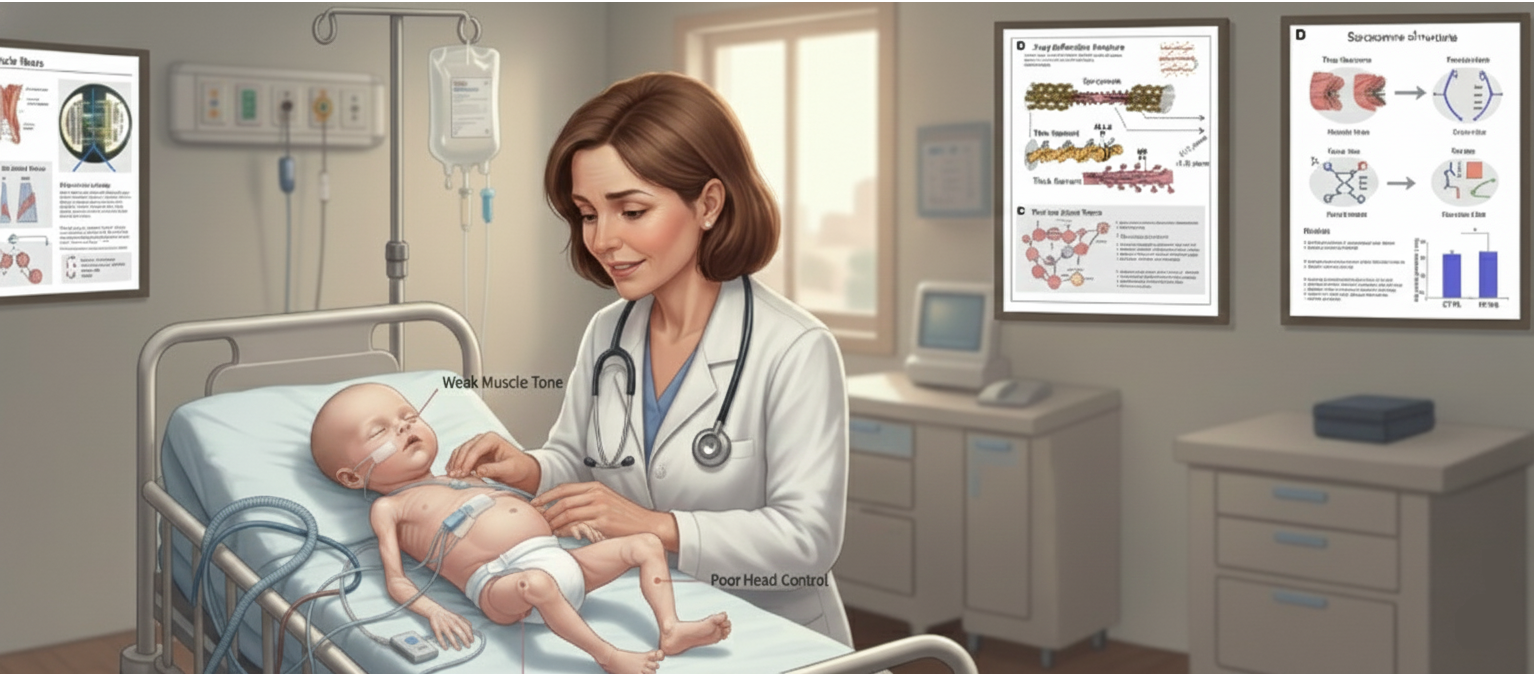
What is Nemaline myopathy in babies?
When this disease affects a child at birth or in infancy, it is called nemaline myopathy baby.
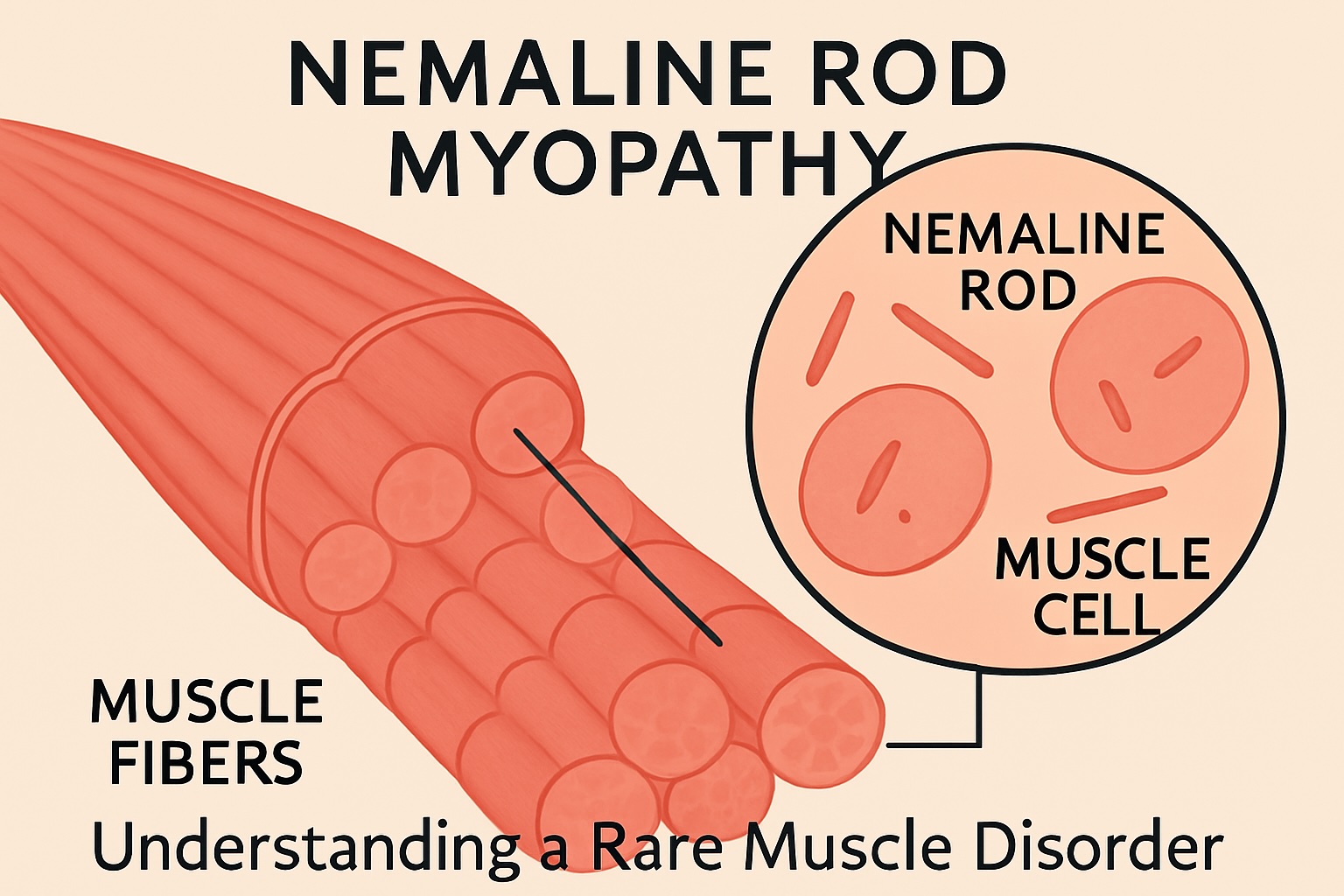
Nemaline myopathy is a rare genetic muscle disorder characterized by muscle weakness. In this disease, small, rod-like structures, called nemaline rods, are found within the muscle cells.
Main Causes of Nemaline Myopathy in Babies
Nemaline myopathy in babies is primarily caused by genetic factors.
These may include mutations in the following genes:
- NEB
- TPM2
- ACTA1
- TPM3
- TNNT1
- CFL2
These genes play a role in the proper development of muscles. Mutations in these genes can lead to muscle weakness
How rare is this disease?
Nemaline myopathy is a rare genetic disorder, affecting only a very small number of children—about 2 in every 100,000 births.
Although uncommon, early diagnosis is crucial to provide timely care and support for affected babies.
Early symptoms of Nemaline myopathy in babies
The initial symptoms of nemaline myopathy in babies may appear at birth or within a few months.
Main symptoms:
- The baby appears very floppy (floppy baby syndrome)
- Weakness in the arms and legs
- Difficulty holding the head up
- Weak cry
- Difficulty feeding
- Slow weight gain
- Reduced movement
Severe Symptoms and Signs
In some cases, the symptoms may be more severe:
- Difficulty breathing
- Frequent respiratory infections
- Difficulty swallowing
- Weakness of the facial muscles
- Inability to close the mouth properly
- Easy fatigue
How is it diagnosed in newborns?
The doctor first performs a physical examination of the child. If a significant weakness is observed, further tests are conducted.
Nemaline myopathy diagnosis in a baby
The diagnostic tests include:
- Physical examination
- Muscle strength and movement are assessed.
- Muscle biopsy
- This test involves taking a small sample of muscle tissue for examination, which reveals the presence of nemaline rods.
- Genetic testing
- This is the most definitive method for confirming the diagnosis.
- EMG test
What is a muscle biopsy?
In a muscle biopsy, a small piece of muscle tissue is taken and examined under a microscope. Rod-like structures are visible, which confirms the diagnosis of nemaline myopathy.
The role of genetic testing
Genetic testing reveals which gene is affected. This helps in:
- Confirming the diagnosis
- Facilitating future planning
- Providing counselling to the family
Is it possible to treat Nemaline myopathy in babies?
Currently, there is no permanent cure for nemaline myopathy in babies.
However, with proper care, therapy, and support, the child’s condition can be significantly improved.
Nemaline myopathy treatment for babies
The goal of treatment is to control symptoms and improve the child’s quality of life.
Main treatments include:
- Physiotherapy
- Respiratory support
- Nutritional management
- Speech therapy
- Regular medical follow-up
The importance of physiotherapy
Physiotherapy helps by:
- Keeping muscles active
- Reducing stiffness
- Improving movement
- Assisting with sitting and walking
Respiratory treatment
Some children may need help with breathing.
This includes:
- Breathing exercises
- Non-invasive ventilation
- Oxygen support (as advised by a doctor)
Feeding and nutrition management
Feeding can be a major challenge in babies with nemaline myopathy.
Solutions:
- Soft and easily digestible foods
- Feeding in the correct position
- Tube feeding if necessary
- Consultation with a nutritionist
Speech and swallowing therapy
Speech therapists help children with swallowing and speaking. This results in:
- Reduced risk of choking
- Improved speech abilities
Accessories and support
Some children need:
- Neck support
- Special chairs
- Braces
- Wheelchairs
These things make the child’s daily life easier.
Essential care tips for parents
- Be patient and maintain a positive attitude.
- Stay in regular contact with your doctor.
- Continue therapy consistently.
- Take precautions to prevent infections.
- Provide emotional support to your child.
- Seek accurate information.
The future of a baby with nemaline myopathy
Every child’s future is different. Some children may lead normal lives with mild symptoms, while others may require long-term care.
Timely treatment and therapy can improve their quality of life.
Is this disease life-threatening?
Not in every case.
In some severe cases, respiratory complications can increase the risk, but with proper medical support, many children live safe lives.
Research and future treatments
Scientists are continuously researching this disease:
- Gene therapy
- New medications
- Improved rehabilitation techniques
- Personalized treatment
Conclusion
Nemaline myopathy in babies is a serious but manageable condition. Early diagnosis, appropriate treatment, physiotherapy, and family support can significantly improve the child’s quality of life.
Awareness and accurate information are the most important factors in managing this condition.

 English